
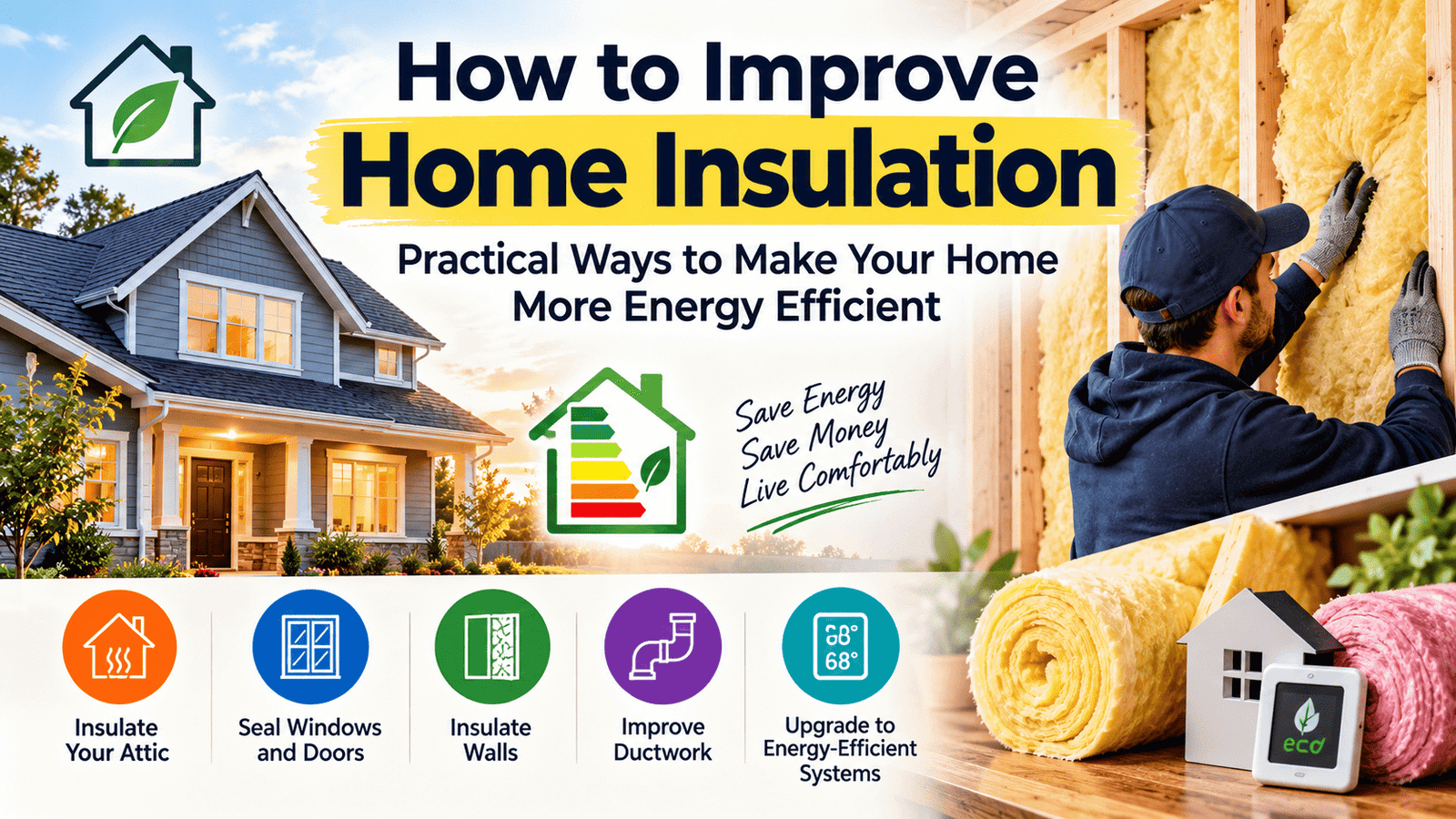
The best way to improve home insulation is to identify air leaks, seal gaps around windows and doors, insulate the roof or attic, and improve the thermal performance of exterior walls and floors. Choosing suitable insulation materials, controlling moisture, and maintaining proper ventilation can help keep indoor temperatures more stable throughout the year. Start with the areas where your home loses or gains the most heat, then prioritise improvements according to your budget and climate.
Introduction
A comfortable home should maintain a reasonably stable indoor temperature without relying excessively on heating or air conditioning. However, poor insulation can allow unwanted heat to enter during hot weather and escape during colder months. This can make rooms uncomfortable, increase energy consumption, and place additional demands on heating and cooling equipment.
Understanding how to improve home insulation helps homeowners make informed decisions about energy efficiency, indoor comfort, and long-term property maintenance. The good news is that improving insulation does not always require a complete renovation. Sealing small gaps, adding suitable window coverings, improving roof insulation, and addressing poorly insulated walls can all contribute to better thermal performance.
The most effective approach depends on the property’s construction, local climate, existing insulation, and the main source of heat transfer. A home in a hot climate may need to limit solar heat entering through the roof and windows, while a property in a colder region may require additional protection against heat loss.
This guide explains the most useful home insulation improvements, the materials available, common mistakes to avoid, and how to prioritise projects for the best results.
Why Is Home Insulation Important?
Insulation slows the movement of heat between different environments. In winter, it helps reduce heat escaping from heated rooms. In summer, it helps limit unwanted heat entering the home from the roof, walls, and other exposed surfaces.
Effective insulation can provide several benefits.
Improved indoor comfort: Better-insulated rooms are less likely to experience significant temperature differences between surfaces and living spaces.
Reduced energy waste: When less heat enters or escapes through the building envelope, heating and cooling systems may need to operate less frequently.
More consistent temperatures: Insulation can reduce hot and cold spots, particularly in rooms beneath roofs or next to exposed exterior walls.
Moisture management: Properly designed insulation and air sealing can help reduce conditions that contribute to condensation. However, incorrect installation can also trap moisture, so ventilation and moisture control remain essential.
Noise reduction: Certain insulation materials can help reduce the transmission of sound through walls, floors, and ceilings.
According to ENERGY STAR guidance, sealing air leaks and adding insulation can improve comfort and energy efficiency, with potential savings of up to 10% on annual energy bills in some circumstances. Actual results depend on the home’s condition, climate, energy use, and the improvements completed.
1. Start by Identifying Air Leaks
Before installing additional insulation, determine where unwanted air movement occurs. Even good insulation may perform poorly when gaps allow outdoor air to enter or conditioned indoor air to escape.
Common problem areas include window frames, exterior doors, roof access panels, plumbing openings, electrical penetrations, and gaps around pipes or ventilation ducts.
Look for rooms that feel unusually hot or cold, noticeable draughts, gaps around frames, or areas where indoor temperatures change quickly. A professional home energy assessment can help identify less obvious problems.
Once the main leaks have been identified, choose an appropriate sealing method. Weatherstripping works well for moving components such as doors and opening windows, while suitable caulk can seal small stationary gaps around frames and trim.
Larger openings may require a different repair method. Do not seal ventilation openings, appliance exhausts, or other openings designed for safety. Ask a qualified professional to assess uncertain areas.
Addressing air leaks before adding insulation is often a sensible first step because it helps prevent uncontrolled airflow from undermining the improvements.
2. Improve Roof and Attic Insulation
The roof is one of the most important areas to assess when improving a home’s thermal performance. Roofs receive direct sunlight, and poorly insulated roof spaces can transfer substantial heat into the rooms below.
In colder climates, insufficient attic insulation can also allow heated indoor air to escape through the ceiling and roof structure.
The appropriate solution depends on the building design. Some homes benefit from insulation placed above the ceiling, while others require insulation integrated into the roof structure. The correct method must account for ventilation, moisture, and the materials already present.
Common roof and attic insulation materials include fibreglass, mineral wool, cellulose, and suitable rigid insulation boards.
Before adding material, check for roof leaks, damp insulation, damaged roof components, and existing ventilation arrangements. Wet insulation should not simply be covered with new material because the underlying moisture problem may continue.
For accessible roof spaces, a qualified professional can assess insulation depth, continuity, and gaps around ceiling penetrations. Insulation should not block required ventilation paths or be installed carelessly around electrical equipment and heat-producing fixtures.
Best approach: Assess the roof first if upper-floor rooms become excessively hot in summer or lose warmth quickly in winter.
3. Seal Gaps Around Windows and Doors
Windows and doors can create noticeable draughts when their frames, seals, or fittings are worn. Fortunately, improving these areas can be relatively affordable compared with replacing entire windows.
Start by checking the perimeter of exterior doors and opening windows. Look for damaged rubber seals, loose frames, visible gaps, and spaces beneath doors.
Weatherstripping can reduce air movement around components that open and close. Door sweeps or suitable threshold seals can address gaps beneath exterior doors. For small cracks between stationary window frames and surrounding trim, an appropriate sealant may be suitable.
Window insulation film and insulated curtains can also help improve comfort, depending on the window design and climate. Heavy curtains may reduce heat transfer through glazing, but they should be used in a way that avoids trapping unwanted moisture around the window.
If existing windows are badly damaged or poorly fitted, repairs or replacement may be more effective than adding temporary coverings.
Remember that sealing a draught is different from improving the insulating value of the glass itself. Both issues may need attention in older properties.
4. Improve Exterior Wall Insulation
Exterior walls separate indoor living spaces from outdoor temperatures. If the walls have little or no insulation, they can contribute to uncomfortable rooms and higher heating or cooling requirements.
The best upgrade depends on whether the home has cavity walls, solid masonry walls, timber framing, or another construction type.
Common options include:
- Cavity wall insulation: Suitable insulation is installed inside an appropriate wall cavity.
- Internal wall insulation: Insulation is added to the interior side of an exterior wall.
- External wall insulation: An insulation system is installed on the outside of the building and finished with a suitable protective layer.
- Insulated wall panels: Certain renovation systems combine insulation with interior or exterior finishing materials.
Each approach has different costs, space requirements, installation challenges, and moisture considerations. For example, internal insulation can reduce usable floor space, while external insulation may affect the building’s appearance and require changes around windows, roof edges, and drainage details.
Do not assume that filling every wall cavity is appropriate. A professional should check the wall construction, existing moisture conditions, and suitability of the proposed material before work begins.
Wall insulation is especially worth investigating during a major renovation, when wall surfaces are already being opened or exterior cladding is being replaced.
5. Choose the Right Insulation Material
Different materials offer different levels of thermal resistance, moisture behaviour, sound absorption, and ease of installation. The most suitable choice depends on where the insulation will be used and how the building is constructed.
| Insulation material | Common applications | Key considerations |
| Fibreglass | Attics, ceilings, and framed walls | Widely used; installation must avoid gaps and compression |
| Mineral wool | Walls, roofs, and selected floor assemblies | Offers thermal and sound insulation; product properties vary |
| Cellulose | Suitable attics and wall cavities | Requires appropriate installation and moisture control |
| Rigid foam boards | Selected walls, roofs, and floors | Useful where a continuous insulation layer is needed |
| Spray foam | Specific gaps and building assemblies | Requires careful product selection and professional installation where appropriate |
| Reflective insulation | Selected roof and ceiling applications | Performance depends on an adjacent air space and installation design |
When comparing products, examine their thermal resistance, commonly expressed as an R-value in North America or a thermal conductivity rating and U-value in many other regions. A higher R-value indicates greater resistance to heat flow for the stated thickness, while a lower U-value generally indicates better insulation performance for a complete building component.
Product labels alone do not determine the best solution. Installation quality, moisture control, gaps, thermal bridges, and the existing structure all influence real-world performance.
6. Insulate Floors Where Necessary
Floors above garages, crawl spaces, or other unheated areas may allow heat to escape in colder climates. They can also create uncomfortable temperature differences between rooms and floor surfaces.
The correct solution depends on the floor structure. Some homes benefit from insulation between floor joists, while others may need improvements to the perimeter of the building or the walls surrounding a crawl space.
Before insulating, check for plumbing leaks, dampness, pests, and other conditions that could damage the materials. The insulation must be compatible with the floor assembly and installed without creating moisture problems.
In homes built directly on a concrete slab, adding insulation may be more practical during renovation than as a simple surface-level project. Suitable flooring upgrades may improve comfort, but they will not necessarily address heat loss throughout the entire structure.
Floor insulation is not always the first priority. If the roof is poorly insulated or substantial air leaks remain, addressing those issues may offer greater benefits.
7. Use Window Coverings and Shading Strategically
Windows influence both heat loss and heat gain. Sunlight entering through glass can warm indoor spaces, particularly during summer, while exposed windows can also allow unwanted heat transfer.
Several practical improvements can help manage these effects.
Use insulated curtains or suitable cellular blinds to create an additional insulating layer. Close curtains during periods of intense summer sunlight, particularly on windows facing the strongest sun. In colder weather, make use of beneficial daylight and close coverings when temperatures drop.
Exterior shading can be especially effective in hot climates because it reduces solar heat before it reaches the glass. Depending on the property, options may include awnings, shutters, overhangs, or carefully positioned shade trees.
If windows are old, damaged, or poorly sealed, consider whether repairs, secondary glazing, or replacement with better-performing windows would be worthwhile.
However, window coverings should not be treated as a substitute for fixing major air leaks or inadequate roof insulation. They work best as part of a broader energy-efficiency plan.
8. Reduce Heat Gain Through the Roof in Hot Climates
In warm regions, improving home insulation often means limiting the amount of heat entering the building rather than simply retaining warmth.
Dark roofs exposed to direct sunlight can become very hot. Depending on the roof design, a reflective roof finish or a suitable cool-roof system may reduce solar heat absorption.
Roof insulation can further slow the transfer of heat into occupied rooms. Adequate ventilation in the appropriate roof space can also help manage heat and moisture, although ventilation design must match the building assembly and local conditions.
Other useful measures include shading exposed windows, sealing gaps around exterior doors, and reducing direct sunlight on heavily exposed walls.
In a hot climate, it is particularly important to distinguish between insulation, air sealing, reflective surfaces, and ventilation. They perform different functions, and the best combination depends on the roof design, humidity, and local weather.
9. Control Moisture and Maintain Proper Ventilation
Improving insulation without managing moisture can cause problems. Warm, humid indoor air may condense on cooler surfaces when the building assembly is poorly designed. Over time, persistent moisture can contribute to mould, material damage, and reduced insulation performance.
Before upgrading insulation, investigate roof leaks, plumbing leaks, damp walls, and signs of persistent condensation. These issues should be resolved rather than concealed behind new materials.
Bathrooms, kitchens, and other moisture-producing areas need appropriate ventilation. Depending on the building, this may involve extractor fans, designed ventilation openings, or a whole-house ventilation system.
Air sealing should not eliminate the ventilation needed for healthy indoor air or the safe operation of fuel-burning appliances. Never block designed combustion-air supplies, flues, or exhaust vents.
If a building has recurring dampness, mould, or unexplained condensation, consult a qualified building professional before making substantial insulation changes.
10. Understand Insulation Costs and Prioritise Improvements
The cost of improving home insulation varies according to the property’s size, local labour rates, accessibility, materials, existing damage, and the extent of the work. A small sealing project may be inexpensive, while insulating walls or replacing windows can require a much larger investment.
Rather than choosing projects based only on price, consider the problem each upgrade solves.
| Improvement | Typical relative cost | Best reason to consider it |
| Weatherstripping and minor sealing | Low | Reduce draughts around doors and windows |
| Insulated curtains or blinds | Low to moderate | Improve comfort near exposed windows |
| Attic or ceiling insulation | Moderate | Reduce heat transfer through the roof or ceiling |
| Floor insulation | Moderate to high | Improve comfort above unheated spaces |
| Wall insulation upgrades | Moderate to high | Improve thermal performance across exterior walls |
| Window replacement | High | Address poor glazing, damaged frames, or persistent window-related heat transfer |
These are broad cost categories, not fixed estimates. Local prices can differ considerably.
A practical plan is to identify the largest problems, address straightforward air leaks, and then obtain professional advice for larger projects. Where possible, combine insulation work with planned roof repairs, wall renovations, or window upgrades to avoid paying for the same access work twice.
Do not assume that every improvement will produce a specific percentage reduction in energy bills. Savings depend on the starting condition of the property, local climate, energy prices, and household behaviour.
11. Common Home Insulation Mistakes to Avoid
Even good insulation materials can deliver disappointing results when installed incorrectly. Avoid these common mistakes:
Ignoring air leaks: Adding insulation without addressing significant gaps may leave the home draughty and reduce the overall benefit.
Choosing the wrong material: An insulation product suitable for an attic may not be appropriate for a damp wall, roof assembly, or floor.
Covering moisture problems: Installing insulation over a leaking roof or damp wall can conceal damage and make repairs more difficult.
Blocking ventilation: Sealing necessary ventilation openings can create moisture problems or affect the safe operation of appliances.
Leaving gaps in insulation: Discontinuities around frames, pipes, and other penetrations can create weak points in the thermal barrier.
Overlooking installation safety: Some materials can irritate skin or lungs, and roof spaces may contain electrical hazards, unstable surfaces, or unsafe temperatures. Follow manufacturer instructions and use qualified installers for work that presents significant risks.
Replacing windows before assessing the whole home: Expensive window upgrades may not be the best first investment if the main problems are roof insulation or widespread air leakage.
A whole-home approach helps ensure that each improvement works with the rest of the building rather than creating a new problem elsewhere.
12. When Should You Hire a Professional?
Simple weatherstripping and some minor sealing tasks may be suitable for homeowners who can complete them safely. More complex insulation projects require a better understanding of building construction, moisture movement, ventilation, and fire safety.
Consider professional assistance when the property has persistent dampness, suspected mould, inaccessible wall cavities, damaged roof structures, old or uncertain insulation, or complex electrical and ventilation systems.
A home energy assessment can help identify where heat enters or escapes and which improvements are likely to provide the greatest benefit. Depending on local availability, an assessor may use thermal imaging, a blower-door test, or other diagnostic methods.
Ask contractors to explain the proposed material, its thermal performance, installation method, moisture-control strategy, and any required ventilation changes. Obtain itemised quotations and compare the scope of work rather than relying on the lowest price alone.
Professional advice is particularly valuable when insulating older buildings, because modern materials and methods are not automatically suitable for every traditional wall or roof construction.
Frequently Asked Questions
1. What is the easiest way to improve home insulation?
Sealing minor air leaks and replacing worn weatherstripping are often among the simplest starting points. Insulated curtains and suitable window coverings may also improve comfort. The best first step depends on the home’s main source of heat loss or heat gain.
2. Which part of a house should be insulated first?
There is no universal order for every home. The roof or attic is often a priority where insulation is inadequate, while obvious air leaks should generally be addressed before adding more insulation. A home energy assessment can help establish the right sequence.
3. Does home insulation reduce energy bills?
It can. Effective insulation and air sealing reduce unwanted heat transfer and may lower heating and cooling demand. The amount saved depends on the home’s original condition, climate, energy prices, and the quality of the improvements.
4. How can I improve insulation without major renovations?
Start with weatherstripping, appropriate caulking, insulated curtains, and suitable shading. These measures can improve comfort without opening walls or rebuilding the roof. They cannot fully replace missing structural insulation where a major problem exists.
5. What is the best insulation material for a home?
There is no single best material for every application. Fibreglass, mineral wool, cellulose, rigid foam, and other products have different characteristics. The right choice depends on the location, required thermal performance, moisture exposure, fire requirements, and building design.
6. Can insulation help keep a house cool in summer?
Yes. Suitable insulation slows the transfer of outdoor heat into indoor spaces. Roof insulation, external shading, effective window coverings, and air sealing can work together to reduce unwanted heat gain.
7. Is it better to seal air leaks before installing insulation?
In most cases, yes. Air sealing helps prevent uncontrolled air movement that insulation alone may not stop. However, the work must preserve necessary ventilation and account for moisture and combustion safety.
Conclusion
Learning how to improve home insulation begins with understanding how heat moves through a building. Roofs, walls, floors, windows, doors, and hidden gaps can all affect indoor comfort and energy consumption.
For many homes, a sensible strategy is to identify air leaks, seal suitable gaps, assess roof insulation, and then investigate walls, floors, and windows according to the property’s needs. The right insulation material and installation method matter just as much as the amount of insulation used.
Moisture control and proper ventilation should remain part of every substantial upgrade. By prioritising the biggest problems, comparing options carefully, and seeking professional guidance when necessary, homeowners can make practical improvements that support a more comfortable and energy-efficient home over the long term.
