
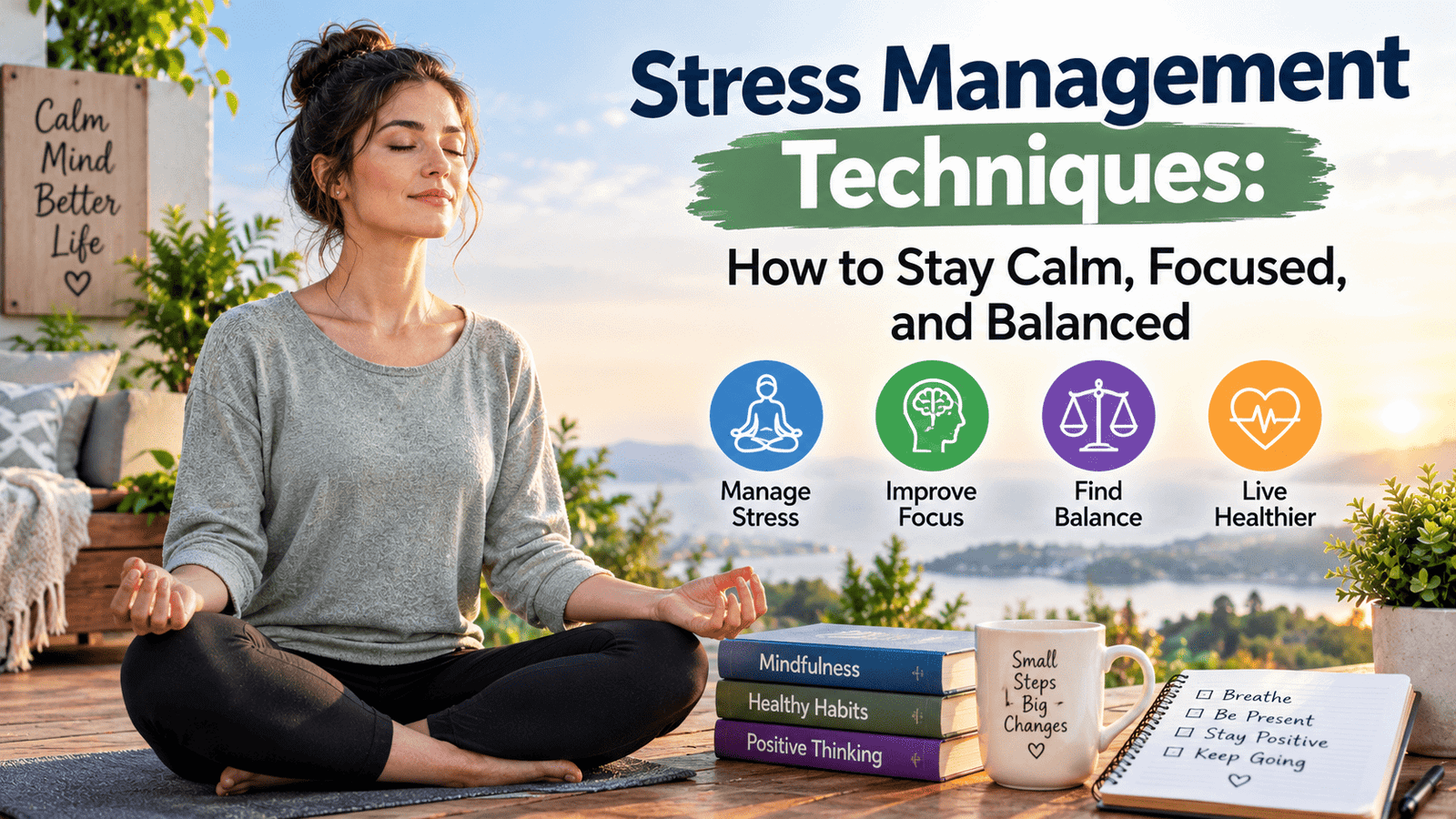
Stress management is the process of recognizing stress, understanding its causes, and using healthy strategies to handle challenging situations. Effective techniques include deep breathing, regular physical activity, adequate sleep, mindfulness, time management, and talking to trusted people. Developing these habits can help you feel calmer, think more clearly, and manage everyday responsibilities with greater confidence.
Introduction
Stress is a common part of everyday life. School assignments, work responsibilities, family expectations, financial concerns, and changes in personal circumstances can all create mental pressure. A small amount of stress may encourage someone to prepare for an important task, but ongoing stress can make it difficult to concentrate, sleep comfortably, and enjoy normal activities. Learning how to respond to pressure is therefore an important part of maintaining overall well-being.
Effective stress management does not mean eliminating every difficult feeling or pretending that problems do not exist. Instead, it involves understanding what causes stress, identifying what can be changed, and developing healthier ways to respond. Simple habits practiced consistently can make challenging situations feel more manageable. The most useful approach is one that fits your circumstances, daily routine, and personal needs.
Understanding the Common Causes of Stress
Stress can develop for many different reasons, and its causes are not the same for everyone. Students may feel pressure because of examinations, deadlines, or expectations about their future. Adults may experience stress related to employment, family responsibilities, relationships, or financial uncertainty. Even positive events, such as starting a new job or moving to another place, can create temporary pressure because they require adjustment.
Sometimes, stress comes from several smaller problems that gradually build up. An unfinished assignment, an uncomfortable conversation, poor sleep, and a busy schedule may seem manageable individually but become overwhelming when they happen together. Identifying these patterns helps people understand why they feel tense and which changes could make the greatest difference.
Recognizing the Signs of Stress
Stress can affect both the mind and the body. Common signs include irritability, frequent worrying, difficulty concentrating, tiredness, headaches, muscle tension, and changes in sleeping habits. Some people also notice that they become impatient, avoid responsibilities, or struggle to make ordinary decisions. These reactions can vary according to the situation and the individual.
Recognizing early signs provides an opportunity to respond before pressure becomes harder to manage. For example, someone who notices increasing frustration during a busy week might benefit from taking short breaks, reorganizing tasks, or discussing responsibilities with a trusted person. Stress symptoms can also have other causes, so persistent or concerning symptoms should not automatically be attributed to stress alone.
Deep Breathing to Encourage Calmness
Deep, comfortable breathing is a simple technique that can help you pause when a situation feels overwhelming. Stress can cause breathing to become faster or shallower, while slowing the breath may encourage a calmer physical response. This technique is useful because it can be practiced at home, during a study break, or before an important conversation without requiring special equipment.
To begin, sit comfortably and relax your shoulders. Breathe in gently through your nose, then breathe out slowly without forcing the air. Continue for a few comfortable cycles while paying attention to the movement of your breath. If you feel dizzy or uncomfortable, return to normal breathing. Regular practice may help you become more familiar with calming yourself during stressful moments.
Physical Activity and Stress Relief
Physical activity is another practical way to support emotional well-being. Walking, cycling, dancing, swimming, playing a sport, or simply moving around outdoors can provide a break from repetitive worries. Movement can also improve sleep and help some people feel more energetic. You do not need an intense workout or expensive equipment to make physical activity part of your daily routine.
Choose an activity that you enjoy and can maintain comfortably. A short walk after studying, gentle stretching between tasks, or playing a recreational sport can be a reasonable starting point. The purpose is to support your well-being rather than create another source of pressure. Consistency and enjoyment are generally more helpful than following an unnecessarily demanding routine.
Mindfulness and Meditation for Better Focus
Mindfulness means paying attention to the present moment instead of becoming completely absorbed in worries about the past or future. When stress builds up, the mind may repeatedly revisit a mistake or imagine everything that could go wrong. Mindfulness encourages you to notice these thoughts without automatically treating them as facts or reacting to every one of them.
You can begin with five minutes of quiet attention. Sit comfortably, notice your breathing, and gently bring your attention back whenever your thoughts wander. You can also practice mindfulness while walking, eating, or listening to someone speak. The goal is not to empty your mind of thoughts but to develop a more balanced relationship with them. With practice, this approach may help you respond more thoughtfully to challenging situations.
Managing Time and Daily Responsibilities
An overloaded schedule can make stress feel constant. When several tasks compete for attention, it becomes difficult to decide where to begin. Effective time management reduces some of this pressure by making responsibilities clearer and helping you focus on what matters most. It also encourages realistic expectations rather than the belief that everything must be completed immediately.
Start by writing down the tasks you need to complete. Identify the most important or time-sensitive responsibility and divide larger projects into smaller steps. Include breaks and allow extra time for unexpected problems. If your schedule is consistently too demanding, consider which commitments can be postponed, simplified, or discussed with someone who can help. A realistic plan is more useful than an ambitious schedule that leaves no room to rest.
Building Healthy Sleep Habits
Sleep and stress can influence each other. Worry may make it harder to fall asleep, while insufficient sleep can affect concentration, patience, and emotional regulation the following day. This can create a cycle in which tiredness makes everyday challenges feel more difficult and those challenges then interfere with sleep.
A consistent sleep routine can help support better rest. Try to go to bed and wake up at reasonably regular times, create a comfortable sleeping environment, and reduce stimulating screen use before bedtime. Avoid using late-night hours to repeatedly review every unfinished task. If worries appear when you lie down, write them in a notebook and identify one practical step you can take the next day.
Eating Well and Maintaining Daily Energy
Food and hydration are important parts of general health and can influence how you feel throughout the day. Skipping meals, drinking too little water, or relying heavily on caffeinated drinks may leave some people feeling tired, uncomfortable, or restless. Although no particular food can eliminate stress, balanced eating can support normal physical and mental functioning.
Aim for regular meals that include a variety of foods, such as vegetables, fruit, whole grains, protein sources, and other nutritious options available to you. Drink water throughout the day and notice whether caffeine affects your sleep or makes you feel more unsettled. Rather than following a restrictive diet, focus on sustainable habits that support your energy and fit your everyday life.
Connecting With Friends and Family
Trying to manage every problem alone can increase feelings of pressure. Talking to someone you trust may provide emotional relief, a different perspective, or practical assistance. A supportive conversation does not need to produce an immediate solution. Sometimes, explaining what has been difficult is enough to help you organize your thoughts and decide what to do next.
Choose a person who listens respectfully and takes your concerns seriously. This might be a friend, family member, teacher, counselor, or another trusted adult. You can explain what is worrying you and ask for the kind of support you need, whether that means advice, help with a task, or simply someone who will listen. Healthy connections are an important part of coping with difficult periods.
Changing Unhelpful Thought Patterns
Stress can influence how people interpret events. A small mistake may feel like a complete failure, or an uncertain situation may seem certain to end badly. These reactions can increase emotional pressure, especially when the mind repeatedly focuses on worst-case outcomes. Learning to examine thoughts more carefully can help create a more balanced response.
When you notice a stressful thought, pause and ask yourself what you actually know about the situation. Consider whether there is another reasonable explanation and what you would say to a friend facing the same problem. Replace extreme judgments with realistic statements, such as, “This is challenging, but I can take one step at a time.” You do not have to force yourself to feel positive; the aim is to think more fairly and constructively.
Taking Breaks From Screens and Constant Information
Digital devices make communication and learning easier, but continuous notifications, social comparisons, and repeated exposure to upsetting news can add to mental pressure. Checking messages while studying or switching repeatedly between tasks may also make it harder to concentrate. A few intentional boundaries can help create more space for rest and focused attention.
Consider turning off unnecessary notifications, setting aside device-free periods, or checking news at specific times rather than throughout the day. Avoid comparing your everyday experiences with carefully selected images of other people’s lives online. Use technology in ways that support your goals, relationships, and interests. If a particular digital activity consistently leaves you feeling tense, reducing your exposure may be worth trying.
Making Time for Enjoyable Activities
Rest and recreation are not rewards that must always wait until every responsibility is finished. Enjoyable activities can provide a mental break and help you maintain a sense of balance. Reading, drawing, gardening, listening to music, cooking, spending time outdoors, or participating in a hobby can make daily life feel less dominated by obligations.
Choose activities that genuinely interest you rather than those that create additional expectations. Even a brief period spent doing something enjoyable can offer a useful change of pace. If you have a busy schedule, plan small opportunities for recreation instead of waiting for a completely free day. Maintaining interests outside work or study can help protect time for relaxation and personal fulfillment.
Learning to Set Boundaries and Ask for Help
Stress sometimes increases because people accept more responsibilities than they can reasonably manage. They may worry about disappointing others, so they agree to additional tasks even when their schedules are already full. Over time, this can reduce opportunities for sleep, relaxation, and important personal responsibilities.
Setting boundaries means being honest about your time, energy, and limitations. You can explain that you need more time, ask someone to share a task, or politely decline a commitment when appropriate. Boundaries do not mean ignoring other people; they help make responsibilities more manageable. If a problem is beyond your control, seeking guidance from a trusted person may be more effective than repeatedly trying to solve it alone.
Creating a Simple Daily Stress Management Routine
A useful routine does not need to involve complicated schedules or many different activities. Start with a few habits that fit naturally into your day. In the morning, identify your main priorities and give yourself enough time to prepare. During the day, take brief breaks, move around, eat regularly, and use comfortable breathing when you notice tension increasing.
In the evening, reduce unnecessary distractions and spend a few minutes reviewing what went well and what needs attention tomorrow. Make room for enjoyable activities and follow a consistent bedtime routine where possible. Treat the routine as flexible rather than another task to complete perfectly. If one approach does not help, adjust it and try another. Small, realistic changes are easier to maintain than a complete lifestyle overhaul.
When to Seek Professional Support
Self-help strategies can be useful, but they are not always enough. If stress continues for an extended period, interferes with school, work, relationships, or sleep, or makes everyday responsibilities difficult to manage, consider speaking with a qualified healthcare or mental health professional. Persistent physical symptoms also deserve appropriate medical assessment, since they may have causes unrelated to stress.
A professional can help identify contributing factors and discuss suitable approaches, including counseling or other forms of care when appropriate. If you are a student, a school counselor or trusted adult may help you find support. Seeking assistance is a sensible step toward addressing a problem, not a sign of weakness. You do not have to wait until your difficulties become severe before asking for help.
Conclusion
Stress is a normal response to challenging situations, but it does not have to control every part of daily life. Deep breathing, regular movement, sufficient sleep, realistic planning, mindfulness, supportive relationships, and enjoyable activities can all contribute to healthier coping habits. Different techniques work for different people, so it is worth paying attention to which approaches make you feel more settled and capable.
The most effective approach to stress management is practical, consistent, and flexible. Begin with one or two manageable changes instead of trying to transform your entire routine at once. Recognize your limits, address problems where possible, and seek professional support when stress becomes difficult to handle. Over time, these habits can help you approach everyday challenges with greater clarity and emotional balance.
Frequently Asked Questions
1. What are the most effective stress management techniques?
Useful techniques include slow breathing, physical activity, mindfulness, healthy sleep habits, realistic time management, and talking with trusted people. The most suitable combination depends on the causes of your stress and your individual needs.
2. How can I reduce stress naturally at home?
You can try taking a short walk, practicing comfortable breathing, listening to music, stretching, writing down your concerns, or speaking with someone supportive. Choose an activity that feels manageable and make it part of your routine when possible.
3. Can stress affect sleep and concentration?
Yes. Stress can make it difficult to relax, focus on tasks, and fall asleep. Poor sleep may then make it harder to manage emotions and everyday responsibilities. A consistent sleep routine and healthy coping strategies may help.
4. When should I seek help for stress?
Consider professional support if stress persists, affects daily functioning, disrupts sleep, or becomes difficult to manage with your usual coping methods. A qualified healthcare professional can help you understand your symptoms and explore appropriate support.
