
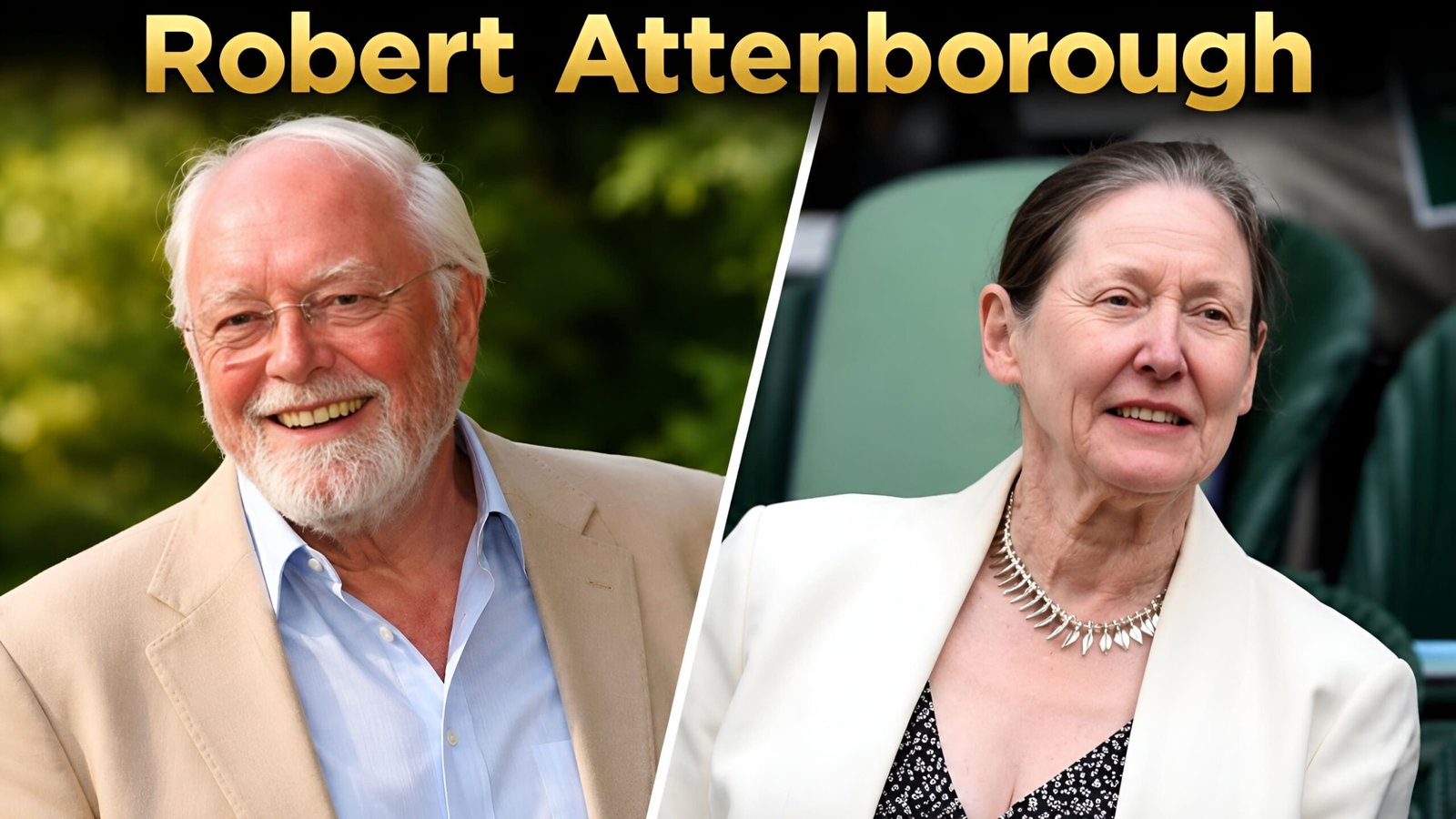
Robert Attenborough is a British biological anthropologist born in August 1951, and the son of legendary broadcaster Sir David Attenborough. He is best known in academic circles for his research on human population biology, health, and nutrition in Papua New Guinea. He has held senior positions at the Australian National University (ANU) and the University of Cambridge’s McDonald Institute for Archaeological Research.
Robert Attenborough may not be a household name, but within the world of biological anthropology, he commands deep respect. Born in 1951 as the son of Sir David Attenborough, Robert chose a path of quiet scholarly pursuit over public fame. He built a distinguished career at two of the world’s leading academic institutions — the Australian National University (ANU) in Canberra and the University of Cambridge — dedicating decades to understanding how human populations in Papua New Guinea adapt to their environments. His groundbreaking research on health, nutrition, demography, and human evolution has contributed meaningfully to science. This article explores every dimension of his life, career, family, and lasting legacy.
Quick Bio Table: Robert Attenborough
| Full Name | Robert David Attenborough |
| Date of Birth | August 1951 |
| Age (2026) | 74–75 years old |
| Nationality | British |
| Profession | Biological Anthropologist & Academic Researcher |
| Education | University-level; biological anthropology (details private) |
| Current Affiliation | Honorary Senior Lecturer, ANU; Senior Fellow, McDonald Institute, Cambridge |
| Specialization | Human population biology, health, nutrition, demography (Papua New Guinea & Pacific) |
| Notable Work | Human Biology in Papua New Guinea: The Small Cosmos (co-edited); Papuan Pasts (2005) |
| Father | Sir David Attenborough (legendary naturalist & broadcaster) |
| Mother | Jane Elizabeth Ebsworth Oriel (d. 1997) |
| Sibling | Susan Attenborough (younger sister) |
| Uncle | Sir Richard Attenborough (actor & director) |
| Marital Status | Not publicly disclosed |
| Net Worth | Not publicly disclosed |
Who Is Robert Attenborough?
Robert Attenborough is a British biological anthropologist who has dedicated his entire professional life to studying the human populations of Papua New Guinea and the broader Pacific region. Born in August 1951, he is the son of the world-famous naturalist and broadcaster Sir David Attenborough. While his father became one of the most recognizable faces in the history of television, Robert deliberately chose the quieter, more rigorous path of academia — and built a career that stands proudly on its own scientific merits.
In the United Kingdom, he is known publicly through his family connection, but in international academic circles, Robert Attenborough is recognized as a thoughtful, careful, and productive scholar. His work sits at the intersection of biology, culture, ecology, and history. Over a career spanning more than three decades, he has contributed fundamental knowledge about how isolated human communities develop, adapt, and survive — research that carries meaning far beyond the lecture hall or the journal page.
Early Life and Family Background
Robert Attenborough was born into one of Britain’s most intellectually celebrated families. His father, Sir David Attenborough, was already building what would become a legendary broadcasting career, while his uncle, Sir Richard Attenborough, was forging a remarkable path in film as both an actor and director. Despite being surrounded by such extraordinary public figures, Robert’s childhood was deliberately kept private and away from the media spotlight that followed the Attenborough name.
His mother, Jane Elizabeth Ebsworth Oriel, married Sir David in 1950, and together they raised two children — Robert and his younger sister, Susan Attenborough. Jane was known for her strong personality and her dedication to family life, and she and David remained married for 47 years until her death in 1997. This stable, loving, and intellectually rich home environment gave Robert a strong foundation from which to build an independent academic identity — separate from, but not uninfluenced by, the remarkable family legacy surrounding him.
Education and Academic Training
While specific details of Robert Attenborough’s university education have not been made fully public, his professional record clearly indicates advanced academic training in biological anthropology and related disciplines. His career profile — involving senior lectureship at the Australian National University and fellowship at the University of Cambridge — is consistent with doctoral-level qualifications in a field that demands rigorous scientific and fieldwork preparation. Companies House records confirm his British nationality and August 1951 birth date, adding a thin layer of verifiable personal detail to an otherwise private biography.
Anthropology, particularly biological anthropology, requires a student to master a broad range of disciplines: human biology, genetics, evolutionary theory, statistics, fieldwork methodology, and cultural analysis. That Robert Attenborough rose to senior academic positions at two world-class institutions speaks to the depth and quality of his preparation and intellectual commitment. His academic training was clearly designed not to win public applause but to enable serious, long-term contributions to human science — a goal he has achieved with distinction.
Career at the Australian National University (ANU)
The Australian National University in Canberra became Robert Attenborough’s primary professional home for much of his career. At ANU, he served as a Senior Lecturer in bioanthropology within the School of Archaeology and Anthropology — a role that placed him at the heart of one of the Southern Hemisphere’s leading research institutions. His time at ANU was characterized by a deep commitment to fieldwork, research design, student mentorship, and collaborative academic program-building. He retired from full-time teaching at ANU around 2013, but the institution still lists him as an Honorary Senior Lecturer.
At ANU, Robert built what became one of the most sustained and detailed research programs on human population biology in Papua New Guinea. Over more than three decades, he examined how communities in that region responded biologically and socially to their environmental conditions — studying nutrition, disease patterns, growth, and demographic change across populations with some of the longest continuous human habitation records on Earth. The Canberra Times once reported that Sir David Attenborough visited the city specifically to see his son, then described as a senior lecturer in bioanthropology — a small but telling glimpse into their warm relationship and Robert’s standing as a respected professional.
Cambridge Connection and the McDonald Institute
In parallel with his ANU career, Robert Attenborough maintained a significant and lasting affiliation with the University of Cambridge. He is listed as a Senior Fellow at the McDonald Institute for Archaeological Research — one of the world’s leading centres for the study of human prehistory, archaeological science, and evolutionary anthropology. This dual affiliation, spanning two continents and two world-class institutions, speaks to Robert’s standing within the international academic community and the cross-disciplinary relevance of his research.
Cambridge’s McDonald Institute brings together researchers from archaeology, genetics, linguistics, and biological anthropology to study the deep human past. Robert Attenborough’s focus on Papua New Guinea and Pacific populations fits naturally within this context, because PNG represents one of the most genetically and culturally diverse places on Earth — offering unparalleled insight into prehistoric human migration, adaptation, and diversity. His involvement at Cambridge reflects the recognition that his decades of fieldwork and data collection from PNG have direct relevance to global questions about where humans came from and how they spread across the planet.
Research Focus: Papua New Guinea and Human Population Biology
Papua New Guinea sits at the heart of Robert Attenborough’s life’s work. The country is home to extraordinary biological and cultural diversity — with hundreds of languages, numerous distinct ethnic groups, and populations that have been relatively isolated for thousands of years. These characteristics make it a scientifically invaluable site for studying human adaptation, evolutionary change, nutritional health, and demographic development. Robert spent decades conducting fieldwork there, accumulating data that contributed meaningfully to the global understanding of human biology.
His research examined how environmental conditions, resource availability, cultural practices, and social structures shape human health and development over time. He studied nutrition, disease patterns, growth rates, and population dynamics — combining biological data with contextual cultural and ecological analysis. This kind of slow, careful, cumulative scientific work may not generate headlines, but it adds reliably to the shared body of human knowledge. His work has been cited in genome-wide studies of PNG populations — research that has helped illuminate prehistoric human migration routes across the Pacific tens of thousands of years ago.
Published Works and Academic Contributions
Among Robert Attenborough’s most notable published contributions is Human Biology in Papua New Guinea: The Small Cosmos, a seminal work that explores how isolated Pacific populations adapt to their environments over long periods. This work encapsulates his core research agenda and represents a significant contribution to the field of human population biology. The book draws on years of fieldwork and data analysis, presenting findings that are both scientifically precise and deeply informative about the lives of real human communities.
He also co-edited Papuan Pasts: Cultural, Linguistic and Biological Histories of the Papuan-Speaking Peoples, published under Pacific Linguistics in 2005. This major collaborative volume brings together researchers from archaeology, linguistics, and genetics to explore the deep histories of Papuan-speaking peoples — a project that reflects Robert’s commitment to interdisciplinary scholarship and his willingness to work across academic boundaries. These publications have been cited widely and stand as enduring contributions to Pacific anthropology and human evolutionary science.
Robert Attenborough’s Approach to Privacy and Public Life
One of the most striking things about Robert Attenborough is the deliberateness with which he has managed his public profile — or rather, avoided one entirely. In an era of social media presence, celebrity culture, and personal branding, Robert has maintained a near-total absence from public life. There are no verified social media accounts, no media interviews, no public appearances, and no personal statements. His only confirmed public traces are his institutional academic profiles, his published research, and the occasional mention in news reports relating to his father.
This is not accidental. It reflects a considered personal choice — to let the work speak for itself, to maintain the separation between private life and public reputation that his family has always valued. In this sense, Robert Attenborough presents a fascinating counter-narrative to the celebrity culture his father inadvertently helped create. While David Attenborough became a global icon through decades of television work, Robert chose the quiet authority of the research institution and the academic journal — a different kind of legacy, but no less meaningful for those who understand what it represents.
The Attenborough Family: A Legacy of Brilliance
The Attenborough family name carries enormous weight in British cultural life. Sir David Attenborough is arguably the most respected nature broadcaster in history — a man whose voice and vision have shaped public understanding of the natural world for over 70 years. His brother, the late Sir Richard Attenborough, was equally celebrated as an Oscar-winning filmmaker and actor. Into this remarkable family Robert Attenborough was born — and rather than riding the wave of the family name, he chose to forge his own identity through serious scientific work.
The Attenborough family story is, at its heart, a story about different kinds of excellence. David pursued public communication and conservation advocacy. Richard pursued storytelling and cinematic art. Robert pursued scientific knowledge and academic rigor. Together, these three figures represent something unusual — a family in which true distinction was achieved across completely different fields, through completely different means, with a shared underlying commitment to doing something meaningful with one’s professional life. Robert may be the least famous of the three, but within his own world, he is no less distinguished.
Who Is Susan Attenborough? Robert’s Sister
Susan Attenborough is the younger sister of Robert Attenborough and the daughter of Sir David Attenborough and Jane Oriel. Like her brother, Susan has maintained a very private personal life and has largely stayed away from public attention despite her famous surname. She was born after Robert in the early 1950s, and the two siblings shared a childhood characterized by intellectual stimulation, family warmth, and a strong sense of privacy instilled by their parents.
Susan Attenborough is not a public figure in the conventional sense, and very little verified information exists about her personal life, career, or current activities. What is clear is that she, like Robert, represents a different kind of Attenborough legacy — one lived away from cameras and public recognition, defined by personal choices rather than professional fame. The quiet dignity of both Robert and Susan stands in interesting contrast to the extraordinary public careers of their father and uncle, and says something meaningful about the values the Attenborough family has consistently upheld across generations.
Robert Attenborough Age, Net Worth, and Personal Life
Born in August 1951, Robert Attenborough is currently 74 to 75 years old as of 2026. He has spent the majority of his adult life in academia and research, which is not typically associated with significant personal wealth in the way that broadcasting or entertainment careers can be. No verified net worth figure exists for Robert Attenborough, and any numbers circulating online should be treated as unverified estimates. His career has been built on intellectual contribution rather than financial accumulation, and that distinction is worth preserving.
His personal life — including whether he is married, whether he has children, and where he currently lives — has never been publicly confirmed. He has kept all personal affairs strictly private, and no credible source has documented family details beyond what is already known: that he is the son of David Attenborough and Jane Oriel, the brother of Susan Attenborough, and the nephew of the late Sir Richard Attenborough. This privacy is deliberate and deserves respect, even as public curiosity about the Attenborough family continues to grow with each passing year.
Why Interest in Robert Attenborough Has Grown in 2026
Public interest in Robert Attenborough has increased significantly in 2026, largely connected to the extraordinary attention surrounding his father, Sir David Attenborough, who approached his landmark 100th birthday in May 2026. As global media focused on celebrating one of Britain’s greatest living figures, natural curiosity extended to his family — including Robert, who as the elder child occupies a particularly prominent position in the Attenborough family structure. Searches for topics like Robert Attenborough Wikipedia, Robert Attenborough age, Robert Attenborough family, and Robert Attenborough net worth have all seen notable increases.
This renewed interest has also been fueled by a broader cultural moment in which people are increasingly interested in the lives lived away from public view — particularly within famous families. Robert Attenborough represents a genuinely compelling story: a man born into extraordinary public prominence who chose depth over fame, research over recognition, and the slow accumulation of knowledge over the quick rewards of celebrity. In an age where social media has made public life the default, his chosen invisibility feels almost radical — and that paradox has made him an object of genuine fascination.
Robert Attenborough’s Academic Influence and Legacy
The true measure of an academic’s legacy is not fame or wealth, but the lasting influence their work exerts on their field. By that measure, Robert Attenborough’s legacy is substantial. His research on Papua New Guinea’s human populations has been cited in major genome-wide studies and has contributed directly to the scientific understanding of prehistoric human migration across the Pacific. His co-edited volumes remain standard references in Pacific anthropology. His teaching and mentorship at ANU shaped generations of students who went on to their own careers in biological anthropology and related fields.
Robert Attenborough exemplifies a particular kind of academic excellence: the slow, patient, cumulative building of knowledge that does not generate headlines but does generate genuine understanding. He chose a field that is inherently difficult, demanding fieldwork in remote regions, sustained data collection over long periods, and careful interdisciplinary collaboration. That he produced significant published work, maintained affiliations at two world-class institutions, and continued contributing to the field well into his seventies speaks to an intellectual commitment that is genuinely admirable — and that deserves to be recognized more widely.
Conclusion
Robert Attenborough is far more than simply the son of a famous father. He is a serious, accomplished, and distinguished biological anthropologist whose career has contributed meaningfully to human science. From his decades of fieldwork in Papua New Guinea to his published works and his institutional affiliations at ANU and Cambridge, Robert has built a legacy that stands entirely on its own terms. In choosing depth over fame, research over recognition, and privacy over publicity, he has lived a life that is, in its own quiet way, as remarkable as any in the Attenborough family. As public interest in his story continues to grow in 2026, this is the right time to understand and appreciate who Robert Attenborough truly is.
Frequently Asked Questions (FAQs)
Q1. Who is Robert Attenborough?
Robert Attenborough is a British biological anthropologist born in August 1951. He is the son of Sir David Attenborough and has held senior academic positions at the Australian National University (ANU) and the University of Cambridge’s McDonald Institute for Archaeological Research.
Q2. What is Robert Attenborough’s relationship to Sir David Attenborough?
Robert is Sir David Attenborough’s eldest child. David and his late wife Jane Oriel had two children: Robert and his younger sister Susan. Robert has always maintained a private profile despite his famous father.
Q3. What does Robert Attenborough do professionally?
He is a biological anthropologist specializing in human population biology, health, nutrition, and demography, with a particular focus on Papua New Guinea and Pacific region populations. He has worked at ANU and holds a Senior Fellowship at Cambridge.
Q4. How old is Robert Attenborough in 2026?
Robert Attenborough was born in August 1951, making him 74 to 75 years old in 2026.
Q5. What are Robert Attenborough’s most notable published works?
His most notable works include Human Biology in Papua New Guinea: The Small Cosmos and the co-edited volume Papuan Pasts: Cultural, Linguistic and Biological Histories of the Papuan-Speaking Peoples (Pacific Linguistics, 2005).
Q6. Is Robert Attenborough active on social media?
No. Robert Attenborough has no verified social media presence. He has deliberately maintained a private life and is not active on any public social platform.
Q7. What is Robert Attenborough’s net worth?
Robert Attenborough’s net worth has never been publicly disclosed. He built his career in academia rather than entertainment or media, and no credible verified financial figures exist about him.
Fore more info: Uktimeinsider.co.uk
