
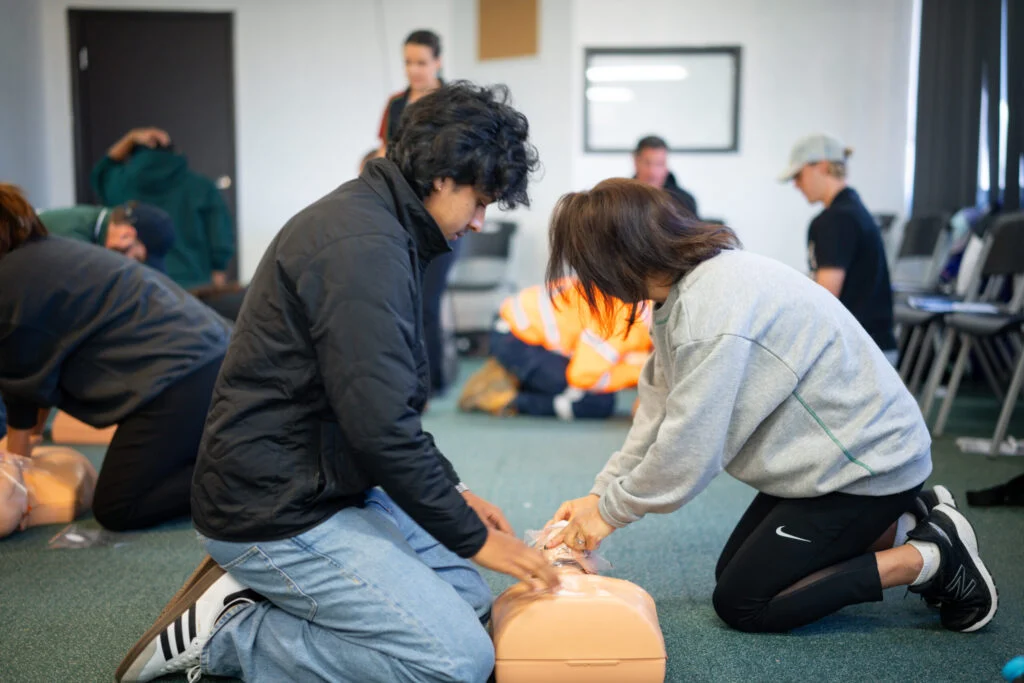
Modern schedules leave little room for sitting in a classroom all weekend just to learn life-saving skills. Blended first aid training splits the workload into self-paced online theory and a single focused day of hands-on practice. You get the exact same workplace-approved certification without sacrificing your entire week.
Picture this: it’s Tuesday evening, you’ve finally finished dinner, and your employer reminds you that your safety certificate expires next month. A few years ago, that meant blocking off an entire Saturday and Sunday to stare at slide decks in a conference room. Today, registering for a First Aid Course St. John’s learners rely on looks very different. You knock out the reading on your couch at your own pace, then show up ready to practice real emergency scenarios.
Why has this hybrid model taken over workplace and personal safety education? Let’s break down how it works, who benefits most, and what to expect when you sign up.
How Does Blended First Aid Training Actually Work?
Think of blended learning like getting a driver’s license. You study the rules of the road from home before ever stepping behind the wheel with an instructor. First aid works the exact same way.
Once you register, you receive access to an interactive online portal. Instead of listening to a lecture, you work through digital modules featuring videos, animations, and quick knowledge checks. You can pause whenever life interrupts—whether that’s a phone call, a crying toddler, or a late shift—and pick right back up later.
Once you pass the online portion, you attend an in-person skills session. Because everyone in the room already knows the textbook theory, the instructor doesn’t waste time reading from a manual. You spend your classroom hours doing what actually builds muscle memory:
- Performing chest compressions on feedback-enabled CPR manikins so you feel the right depth and rhythm.
- Operating an Automated External Defibrillator (AED) trainer under realistic time pressure.
- Practicing choking relief for adults, children, and infants.
- Wrapping wounds and splinting fractures with a partner until your hands know what to do without overthinking.
Does that sound more engaging than sitting in a chair for sixteen straight hours? Most students say the hands-on day flies by.
Why Do Busy Professionals and Parents Prefer Hybrid Courses?
Time is the biggest barrier keeping everyday people from learning CPR and emergency care. When a course demands two consecutive eight-hour days on-site, people put it off until their certification lapses. Blended training removes that friction without cutting corners on quality.
Consider a warehouse supervisor juggling rotating shifts or a parent trying to coordinate weekend childcare. Finding one single day away from home is manageable; finding two in a row is a logistical headache. With a blended setup, you chip away at the eight-hour online module in thirty-minute blocks over a week or two.
There’s also a huge retention benefit that rarely gets talked about. People absorb information at wildly different speeds. In a traditional classroom, fast readers get bored while others feel rushed to take notes before the slide changes. Learning online lets you replay a video on stroke recognition three times if you want, or breeze past concepts you already understand.
Which Certification Level Do You Actually Need?
Walking into course registration without knowing what your workplace or lifestyle requires can feel confusing. While names vary slightly depending on regional workplace safety boards like WSIB, OHS, or WorkplaceNL, most programs fall into three clear tiers:
- Emergency (Basic) First Aid & CPR/AED Level C: This one-day equivalent covers life-threatening emergencies—choking, severe bleeding, heart attacks, and CPR. It’s the standard pick for low-risk offices, retail stores, and personal peace of mind.
- Standard (Intermediate) First Aid & CPR/AED Level C: The gold standard for most Canadian workplaces, including construction, manufacturing, childcare, and schools. It includes everything in Emergency First Aid plus secondary care for head and spine injuries, burns, fractures, and sudden medical conditions like diabetic emergencies.
- Basic Life Support (BLS): Designed specifically for healthcare providers, nurses, paramedics, and clinical staff. It focuses on high-performance team resuscitation, bag-valve-mask ventilation, and airway management.
Always check if your employer specifies Level C for the CPR portion. Level A covers adults only, whereas Level C prepares you to help adults, children, and infants—something every parent, coach, and community member should have in their back pocket.
What Happens During the In-Class Skills Session?
If you’ve never taken a first aid course—or haven’t taken one since high school—it’s normal to feel a little nervous about being tested in front of strangers. Good instructors know this and keep the atmosphere relaxed, supportive, and practical.
You won’t be expected to perform like a seasoned trauma surgeon on your first try. Your instructor demonstrates each technique step by step, watches you practice, and gives gentle pointers on hand placement or body mechanics.
By the end of the session, you complete a straightforward practical assessment and a multiple-choice exam. Because you’ve already reviewed the material online and practiced it physically all day, the pass rate is remarkably high. Most training partners issue your digital certificate within 48 hours, ready to hand straight to your HR department.
Can You Renew an Existing Certificate Without Starting Over?
Nobody wants to repeat an entire beginner course if they already know the basics. If you hold an unexpired Standard First Aid certificate, you typically qualify for a one-day Recertification course.
Recertification skips the online pre-study altogether and focuses purely on refreshing your hands-on skills and updating you on the latest resuscitation guidelines. Just keep an eye on your expiry date. Once a certificate passes its three-year mark, regulations generally require you to take the full course again. Setting a calendar reminder ninety days before expiration saves you both time and money.
If you are looking for first aid training near Downtown St. John’s, Kenmount Road, Mount Pearl, or other areas close to our facility, then you may reach out to Coast2Coast First Aid/CPR – St. John’s in that area. To check schedules in other provinces or compare blended and in-person formats, you can also see Coast2Coast First Aid courses across Canada.
Frequently Asked Questions
Is a blended first aid certificate recognized by employers?
Yes. As long as the course is delivered by an approved training partner—such as a Canadian Red Cross Training Partner—a blended certificate carries the exact same legal and workplace recognition (WSIB, OHS, WorkplaceNL) as a traditional two-day in-person course.
How long does the online portion take to finish?
For Standard First Aid & CPR/AED Level C, the online theory takes roughly 8 hours to complete. For Emergency First Aid, it takes about 4 hours, and standalone CPR/AED Level C takes around 2 to 3 hours. You can complete it across multiple sittings before your scheduled class date.
What happens if I don’t finish the online modules before my class?
You must complete 100% of the online theory before attending your in-person skills day. Instructors cannot assess your practical skills unless your digital completion record is verified beforehand, so aim to finish at least 24 hours early.
How long is my First Aid and CPR certification valid?
Standard First Aid, Emergency First Aid, and CPR/AED Level C certificates are valid for three years from the date of issue. Basic Life Support (BLS) certifications for healthcare professionals require annual renewal every 12 months.
What should I wear to the in-person skills day?
Wear comfortable, casual clothing that allows you to kneel and move freely. You will spend time practicing CPR compressions on manikins on the floor and simulating recovery positions, so athletic wear or flexible pants and closed-toe shoes work best.
