
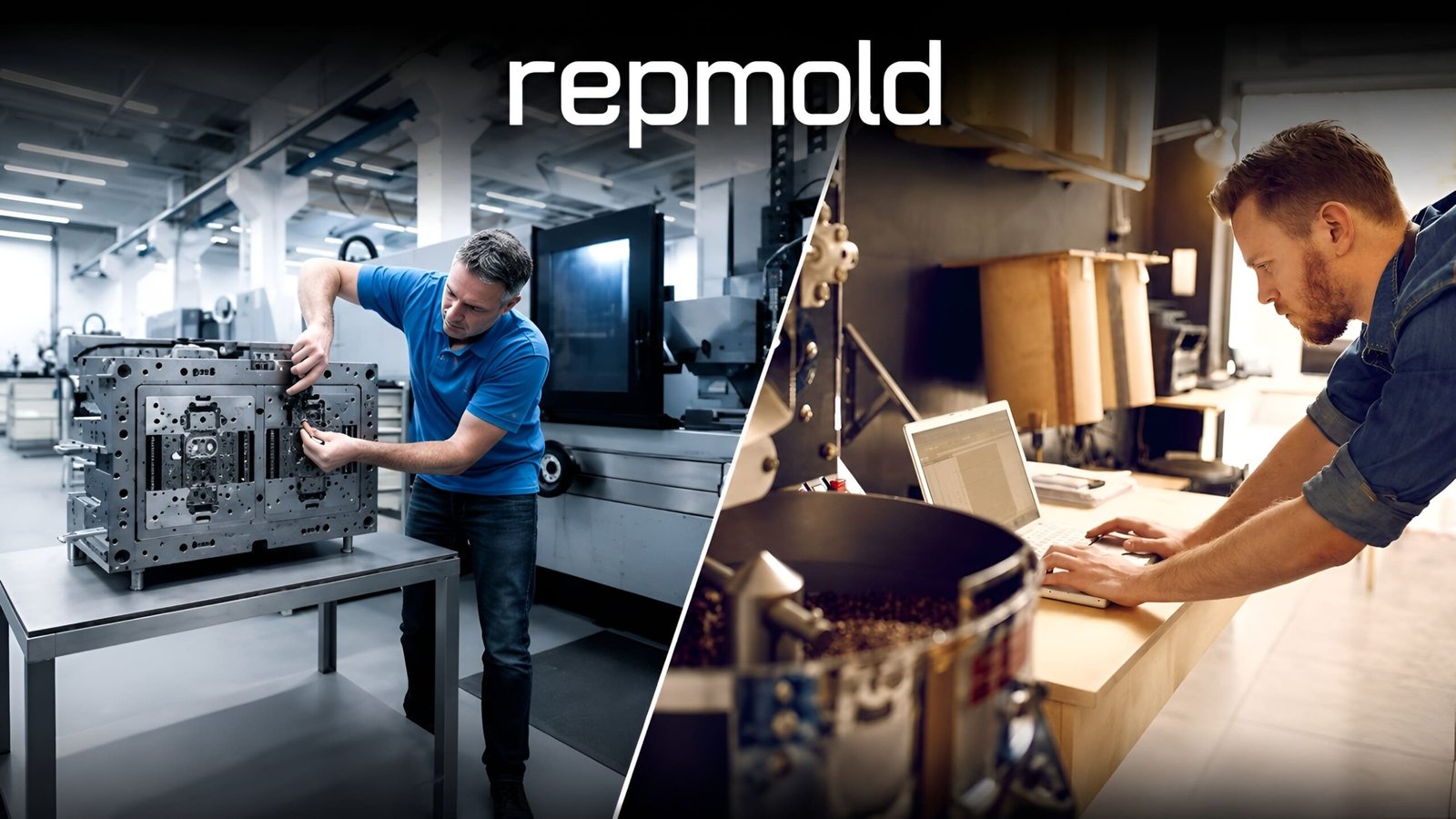
RepMold is a smart manufacturing approach that integrates artificial intelligence, automation, robotics, and digital systems into industrial production. It improves efficiency, reduces errors, and enables real-time decision-making in factories. By combining predictive analytics, IoT, and cloud computing, RepMold supports modern industrial transformation and helps build highly efficient, data-driven manufacturing ecosystems for the future.
Introduction to Smart Manufacturing Evolution
Smart manufacturing has completely changed how modern industries operate by replacing traditional manual systems with highly connected digital production environments. In earlier industrial setups, machines worked in isolation with limited communication, leading to inefficiencies, delays, and higher error rates. However, with the rise of automation, artificial intelligence, and industrial IoT systems, factories have now evolved into intelligent ecosystems. RepMold represents this transformation by focusing on integrated, adaptive, and data-driven production methods that allow industries to operate with higher accuracy and reduced operational waste. This shift is not only technological but also strategic, as companies aim to remain competitive in fast-changing global markets.
In today’s manufacturing landscape, every process is connected through digital networks that enable real-time monitoring and decision-making. Smart manufacturing systems analyze production data continuously and adjust operations automatically for maximum efficiency. This eliminates many manual interventions and improves consistency in product quality. RepMold aligns with this evolution by promoting intelligent workflows where machines, software, and human intelligence work together. As industries continue to adopt these advanced systems, manufacturing is becoming more flexible, scalable, and capable of responding quickly to customer demands and global supply chain changes.
Rise of Intelligent Industrial Systems
Intelligent industrial systems have emerged as a result of advanced computing technologies, machine learning, and sensor-based automation. These systems are designed to continuously monitor production environments and optimize performance without constant human supervision. In modern factories, machines are equipped with sensors that collect real-time operational data such as temperature, vibration, and output speed. This data is analyzed instantly to detect inefficiencies and prevent potential failures. RepMold incorporates these intelligent systems to ensure smoother operations and higher productivity levels in industrial environments.
The rise of intelligent systems has significantly reduced downtime and improved production accuracy across industries. Instead of relying on manual inspections or reactive maintenance, factories now use predictive and adaptive systems that automatically adjust machine behavior based on data insights. This allows industries to maintain consistent product quality while reducing operational costs. RepMold reflects this shift by integrating adaptive technologies that support autonomous decision-making at the machine level. As industries become more complex, intelligent systems play a critical role in ensuring stability, reliability, and long-term operational efficiency.
Role of Digital Transformation in Manufacturing
Digital transformation has become the foundation of modern manufacturing by connecting physical production systems with advanced digital platforms. Through technologies such as IoT, cloud computing, and industrial software solutions, factories can now achieve complete visibility across all operations. This integration allows real-time tracking of machines, inventory, and production processes. RepMold supports this transformation by enabling seamless digital ecosystems where data flows continuously between systems, improving coordination and efficiency across departments.
With digital transformation, decision-making in manufacturing has become faster and more accurate. Managers can now access real-time dashboards that display production performance, resource usage, and system health. This eliminates delays caused by manual reporting and enhances operational transparency. RepMold enhances this capability by promoting data-driven manufacturing environments where every decision is backed by accurate insights. As industries continue adopting digital tools, manufacturing systems are becoming more agile, responsive, and capable of adapting to global market demands with minimal disruption.
Integration of Artificial Intelligence in Factories
Artificial intelligence is revolutionizing manufacturing by enabling machines to learn from data and improve performance over time. AI systems are widely used in quality control, predictive maintenance, demand forecasting, and production optimization. In modern factories, AI analyzes large datasets to identify patterns that humans cannot easily detect. RepMold integrates AI-driven systems that help industries increase precision, reduce waste, and optimize resource utilization.
AI also enables predictive manufacturing, where potential problems are identified before they occur. This reduces unexpected breakdowns and minimizes downtime, leading to higher efficiency and cost savings. Machines equipped with AI can adjust operational settings automatically based on real-time conditions, ensuring consistent product quality. RepMold leverages these capabilities to build intelligent manufacturing systems that operate with minimal human intervention. As AI technology continues to advance, its role in industrial production will become even more critical in shaping the future of manufacturing.
Importance of Automation in Modern Production
Automation is a core component of modern manufacturing systems, designed to improve efficiency, accuracy, and productivity. Automated machines perform repetitive tasks with high speed and precision, reducing human error and operational delays. In large-scale industries, automation ensures continuous production without fatigue or performance variation. RepMold integrates automation technologies that streamline workflows and enhance production consistency across different industrial sectors.
Automation also improves workplace safety by reducing human involvement in hazardous tasks. Robots and automated systems handle dangerous or physically demanding operations, allowing human workers to focus on strategic roles such as system monitoring and decision-making. This shift not only increases productivity but also enhances job quality and operational balance. RepMold emphasizes automation as a key driver of industrial transformation, enabling industries to scale operations efficiently while maintaining high-quality standards and reducing operational costs.
Data-Driven Decision Making in Industry
Data-driven decision-making has become essential in modern industrial environments where large volumes of data are generated every second. Manufacturers use data analytics to monitor production performance, identify inefficiencies, and optimize operational processes. RepMold incorporates advanced data systems that transform raw industrial data into actionable insights for better decision-making.
By analyzing historical and real-time data, industries can predict trends, improve resource allocation, and reduce production waste. This leads to higher efficiency and profitability. Data-driven systems also enhance transparency across the entire supply chain, allowing companies to respond quickly to market changes. RepMold strengthens this approach by ensuring that all manufacturing decisions are supported by accurate, real-time analytics, making industrial operations more reliable and efficient.
Smart Sensors and Real-Time Monitoring Systems
Smart sensors play a vital role in modern manufacturing by continuously monitoring machines and production environments. These sensors collect real-time data such as pressure, temperature, vibration, and operational speed. This information is used to detect irregularities early and prevent system failures. RepMold integrates smart sensor technology to ensure continuous monitoring and improved operational safety.
Real-time monitoring systems allow industries to track performance instantly and respond quickly to potential issues. This reduces downtime and improves equipment lifespan. Managers can access live data dashboards to make informed decisions and maintain production stability. RepMold enhances these capabilities by combining sensor data with predictive analytics, creating a highly responsive and intelligent manufacturing environment that ensures consistent performance and reliability.
Robotics and Machine Learning Integration
Robotics combined with machine learning has transformed industrial production by introducing adaptive and intelligent machines. Unlike traditional robots, modern robotic systems can learn from operational data and improve their performance over time. RepMold integrates robotics with machine learning algorithms to enhance precision, flexibility, and efficiency in manufacturing processes.
These intelligent robots are capable of handling complex tasks that require accuracy and consistency. They are widely used in assembly lines, quality inspection, and hazardous environments. Machine learning enables robots to adapt to new conditions without manual reprogramming. RepMold utilizes this integration to create self-improving industrial systems that reduce human workload and increase productivity while maintaining high safety standards.
Cloud Computing in Manufacturing Systems
Cloud computing has become an essential infrastructure in modern manufacturing due to its scalability, flexibility, and accessibility. It allows industries to store and process large volumes of data without relying on local servers. RepMold integrates cloud-based systems that enable real-time data access and secure storage across multiple production units.
Cloud platforms improve collaboration between different departments and locations by providing centralized access to industrial data. This ensures faster communication and better coordination in production processes. RepMold leverages cloud technology to support scalable manufacturing operations that can adapt quickly to changing business requirements while maintaining high efficiency and data security.
Predictive Maintenance for Industrial Efficiency
Predictive maintenance uses data analytics and AI to predict equipment failures before they occur. This approach helps industries avoid unexpected breakdowns and reduce maintenance costs significantly. RepMold integrates predictive maintenance systems that continuously monitor machine health and provide early warnings for potential issues.
By analyzing historical performance and real-time sensor data, industries can schedule maintenance at optimal times, improving equipment lifespan and reducing downtime. This proactive approach enhances productivity and ensures smooth operations. RepMold supports predictive maintenance as a key strategy for achieving long-term industrial efficiency and reliability.
Cybersecurity in Smart Manufacturing Networks
Cybersecurity is a critical requirement in modern digital manufacturing systems due to increasing connectivity and data exchange. Industrial networks are vulnerable to cyberattacks, data breaches, and unauthorized access. RepMold emphasizes strong cybersecurity frameworks to protect sensitive industrial data and ensure operational safety.
Security measures such as encryption, firewalls, and continuous monitoring are essential for maintaining system integrity. Industries must regularly update their cybersecurity infrastructure to prevent evolving threats. RepMold supports secure manufacturing environments by integrating advanced protection systems that safeguard both operational and financial data.
Energy Efficiency and Sustainable Production
Sustainability has become a major focus in modern industrial systems due to environmental concerns and regulatory requirements. Industries are adopting energy-efficient technologies to reduce carbon emissions and operational costs. RepMold promotes sustainable manufacturing practices through optimized energy usage and resource management systems.
Energy-efficient machines, smart monitoring systems, and process optimization contribute to reduced environmental impact. Sustainable production not only benefits the environment but also improves long-term profitability. RepMold supports this transition by enabling industries to adopt eco-friendly and cost-effective manufacturing solutions.
Supply Chain Optimization Using Technology
Modern supply chains rely heavily on digital technologies to improve efficiency, accuracy, and transparency. Real-time tracking systems and data analytics help industries manage inventory and predict demand more effectively. RepMold integrates supply chain optimization tools that enhance coordination between suppliers and manufacturers.
These technologies reduce delays, improve logistics, and ensure smoother production cycles. Advanced forecasting systems also help industries prepare for market fluctuations. RepMold strengthens supply chain performance by enabling real-time visibility and intelligent decision-making across the entire production network.
Human Workforce in Smart Industrial Era
Even in highly automated environments, human expertise remains essential for managing complex industrial systems. Skilled professionals are needed to analyze data, monitor systems, and make strategic decisions. RepMold emphasizes the importance of human-machine collaboration in modern manufacturing.
Training programs are increasingly focused on digital skills, automation technologies, and data analysis. This ensures workers can effectively operate alongside advanced machines. RepMold supports this balanced approach where human intelligence and machine efficiency work together to achieve optimal industrial performance.
Future of Intelligent Manufacturing Systems
The future of manufacturing will be highly autonomous, intelligent, and interconnected. Factories will rely on AI, robotics, and real-time analytics to operate with minimal human intervention. RepMold represents this future by integrating advanced technologies that support fully digital production ecosystems.
These systems will continuously learn, adapt, and optimize operations for maximum efficiency. As technology advances, manufacturing will become faster, more precise, and more responsive to global demands. RepMold aligns with this transformation by supporting next-generation industrial innovation.
Innovation in Industrial Engineering
Industrial engineering is evolving rapidly due to advancements in automation, AI, and material sciences. Engineers are developing smarter production systems that improve efficiency and product quality. RepMold supports this innovation-driven environment by integrating modern manufacturing technologies.
Continuous research and development are essential for maintaining industrial competitiveness. Innovative systems allow industries to adapt to changing demands and improve long-term productivity. RepMold plays a role in enabling engineering advancements that shape the future of manufacturing.
Global Impact of Smart Manufacturing
Smart manufacturing is transforming global industries by improving productivity and efficiency. Countries adopting advanced technologies are gaining strong competitive advantages in international markets. RepMold contributes to this transformation by promoting scalable and intelligent production systems.
This shift is also creating new job opportunities in technology-driven sectors and improving global supply chain performance. Smart manufacturing is reshaping economic structures and enhancing industrial collaboration worldwide.
Challenges in Industrial Digitalization
Despite its advantages, industrial digitalization faces challenges such as high costs, cybersecurity risks, and skill shortages. Many industries struggle to transition from traditional systems to advanced digital ecosystems. RepMold recognizes these challenges and emphasizes structured transformation strategies.
Successful digitalization requires investment in technology, workforce training, and cybersecurity systems. Overcoming these barriers is essential for achieving long-term industrial success.
Benefits of Advanced Manufacturing Systems
Advanced manufacturing systems provide higher efficiency, reduced costs, and improved product quality. These systems enable industries to respond quickly to market changes and maintain competitive performance. RepMold enhances these benefits through intelligent automation and data integration.Such systems also improve scalability and operational flexibility, making them essential for modern industrial success.
Role of Innovation in Industrial Growth
Innovation drives industrial progress by introducing new technologies and improving production methods. Continuous innovation in AI, automation, and engineering ensures long-term competitiveness. RepMold supports innovation by encouraging advanced manufacturing practices.
Companies that invest in innovation are better positioned for sustainable growth and global competitiveness.
Conclusion on Industrial Transformation
Industrial transformation is rapidly evolving through automation, AI, and digital technologies. Manufacturing systems are becoming more intelligent, efficient, and sustainable. RepMold represents this evolution by integrating advanced industrial solutions.
As industries continue to develop, smart manufacturing will remain the foundation of global production systems and future industrial innovation.
FAQs
What is RepMold in smart manufacturing?
RepMold is a smart manufacturing concept that integrates automation, artificial intelligence, robotics, and data-driven technologies into industrial production systems. It focuses on improving efficiency, reducing operational errors, and enabling intelligent decision-making in factories. By connecting machines, software systems, and human expertise, RepMold supports modern industrial transformation and helps industries move toward fully digital and adaptive production environments.
How does smart manufacturing improve industrial efficiency?
Smart manufacturing improves efficiency by using real-time data, automation, and AI-driven systems to optimize production processes. Machines can monitor their own performance, detect errors early, and adjust operations automatically. This reduces downtime, minimizes waste, and improves product quality. Technologies like IoT and cloud computing also ensure better communication between systems, making manufacturing faster, more reliable, and highly efficient in competitive industrial environments.
What role does AI play in RepMold systems?
Artificial intelligence plays a major role in RepMold by analyzing large volumes of industrial data to improve decision-making and production accuracy. AI systems can predict machine failures, optimize workflows, and enhance quality control. It enables predictive manufacturing instead of reactive problem-solving. This reduces maintenance costs, increases productivity, and ensures consistent performance across industrial operations.
Is automation replacing human workers in manufacturing?
Automation is not fully replacing human workers but transforming their roles. In RepMold-based systems, machines handle repetitive and physically demanding tasks, while humans focus on supervision, analysis, and decision-making. This creates a balanced workforce where human intelligence and machine efficiency work together. It also improves workplace safety and allows employees to develop advanced technical skills.
What are the main benefits of smart manufacturing?
Smart manufacturing offers multiple benefits including higher productivity, reduced operational costs, improved product quality, and better resource management. It also enables real-time monitoring, predictive maintenance, and faster decision-making. These advantages help industries remain competitive in global markets while ensuring sustainable and scalable production systems.
What technologies are used in RepMold systems?
RepMold systems use a combination of advanced technologies including artificial intelligence, robotics, IoT (Internet of Things), cloud computing, machine learning, and big data analytics. These technologies work together to create intelligent manufacturing environments that can monitor, analyze, and optimize production processes automatically and efficiently.
What is the future of smart manufacturing?
The future of smart manufacturing is highly automated, intelligent, and data-driven. Factories will become more autonomous, using AI and robotics to operate with minimal human intervention. Systems will continuously learn and adapt to improve performance. This will lead to faster production, higher accuracy, and more sustainable industrial operations worldwide.
Fore more info: Uktimeinsider.co.uk
