
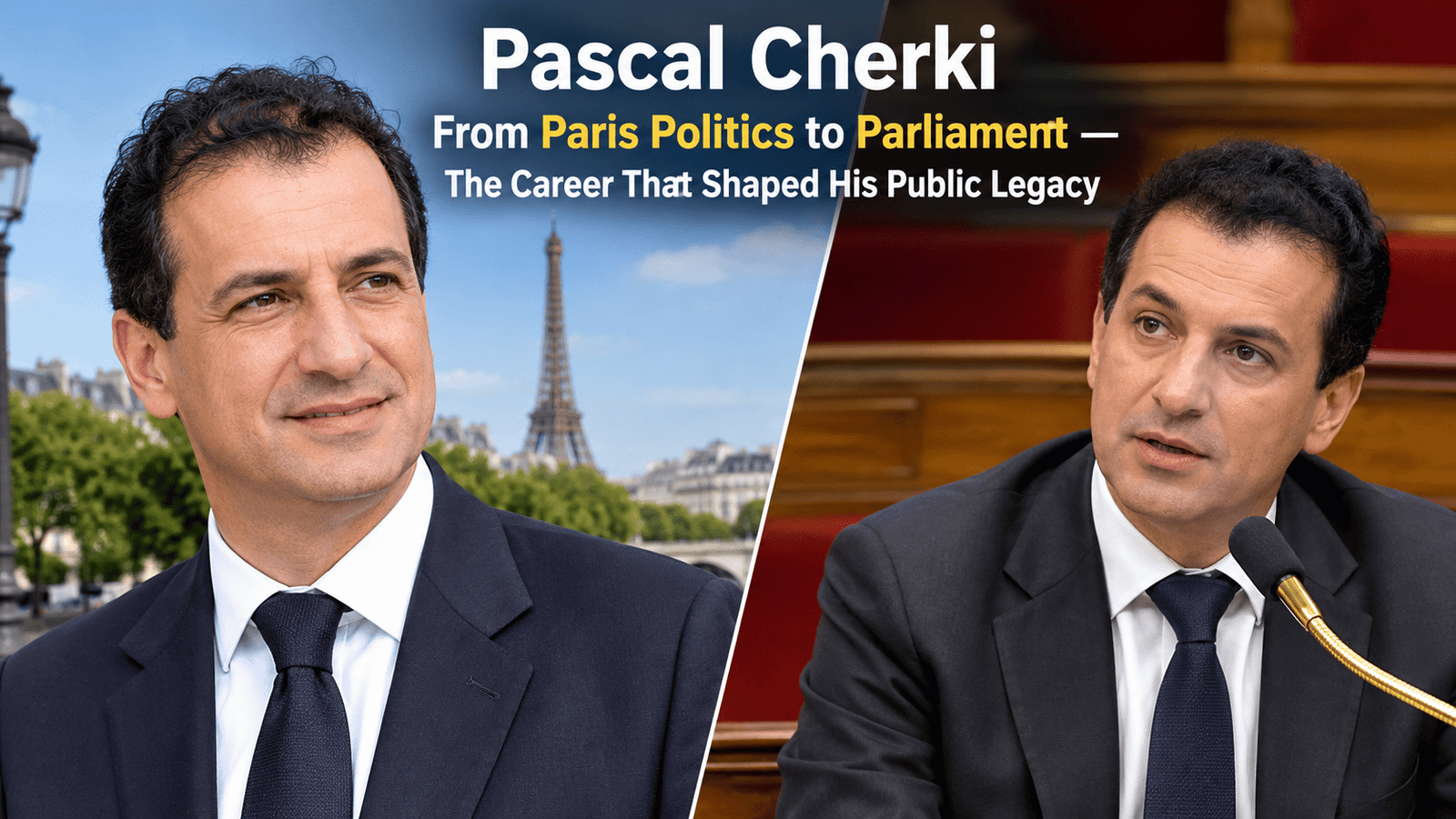
Pascal Cherki is a French politician known for his work in Parisian local government and his service as a member of the French National Assembly. Born in Paris on September 1, 1966, he served as mayor of the 14th arrondissement from 2009 to 2014 and represented Paris’s 11th constituency in the National Assembly from 2012 to 2017. His career also includes years as a Paris councillor and deputy mayor, making local administration a significant part of his political background.
Early Life and Background in Paris
Pascal Cherki was born in Paris, France, on September 1, 1966. Growing up in the French capital would later become an important geographical connection in his public career, as much of his political work focused on the city and its residents. Although his professional life has received attention through official political records, detailed public information about his childhood, family relationships, and private experiences is comparatively limited.
Paris occupies a central place in French political and cultural life. Its municipal government manages matters that directly affect residents, including local services, public spaces, education-related responsibilities, sports facilities, and neighbourhood development. For politicians working within the city, these responsibilities provide opportunities to engage with practical community concerns rather than focusing exclusively on national legislation.
Cherki’s subsequent career developed through Parisian municipal politics before he moved into national parliamentary service. His progression illustrates how elected representatives can build their experience through local institutions and later take part in discussions at the national level.
Entering Politics and Building a Career in Paris
Pascal Cherki became involved in local politics in Paris during the 1990s. He served as a councillor in the 14th arrondissement from 1995 to 2001, establishing a foundation in neighbourhood representation and municipal affairs. This early period of his career placed him within the political structures responsible for addressing issues affecting residents and the wider community.
In 2001, Cherki became a councillor of Paris and took on the additional responsibility of deputy mayor. During his time as deputy mayor, he held portfolios connected with sports and, later, school life and educational achievement. These responsibilities brought him into areas of public administration that affect everyday life, including access to recreational facilities and the organisation of local educational services.
Municipal politics requires representatives to work within administrative systems, respond to community priorities, and coordinate with other elected officials. Such work can involve balancing available resources with the needs of different neighbourhoods. Cherki’s years in Paris city government provided experience in these responsibilities before his later election to national office.
Pascal Cherki as Mayor of the 14th Arrondissement
One of the defining stages of Cherki’s political career began in March 2009, when he became mayor of Paris’s 14th arrondissement. He held the position until April 2014. The arrondissement is a municipal district in southern Paris, with its own local administration operating within the wider structure of the city government.
As arrondissement mayor, Cherki occupied a position closely connected to local public services and neighbourhood representation. The role of a district mayor differs from that of the mayor of Paris as a whole. An arrondissement mayor works within the responsibilities assigned to the district and coordinates with the broader municipal administration on matters affecting local residents.
His previous experience as deputy mayor and councillor provided a background for this position. Responsibilities associated with district government can include local consultation, community facilities, public spaces, and coordination with municipal departments, although the exact authority of an arrondissement mayor is defined by French law and the wider Paris administrative structure.
Cherki’s mayoral tenure ended in April 2014, when Carine Petit succeeded him. The period remains an important part of his public biography because it connects his earlier work in municipal government with his subsequent national parliamentary career.
From Paris City Hall to the French National Assembly
In 2012, Pascal Cherki was elected to represent Paris’s 11th constituency in the French National Assembly. He served from June 20, 2012, until June 20, 2017, as a member of the Socialist parliamentary group, which later used the name Socialist, Ecologist and Republican group.
The National Assembly is one of the two chambers of the French Parliament and plays a central role in the country’s legislative process. Members of the Assembly participate in debates, examine proposed legislation, question government officials, and vote on bills and other parliamentary matters. Their work involves national policies as well as issues affecting the people they represent.
Moving from municipal government to parliament gave Cherki a different set of responsibilities. While local government focuses heavily on services and administration within a particular area, parliamentary work involves legislation, national budgets, and government oversight. His earlier experience in Paris provided a local-government background that he brought into this broader political environment.
His parliamentary mandate ended on June 20, 2017. Marielle de Sarnez subsequently represented the constituency. This electoral transition marked the end of Cherki’s period as a member of the National Assembly, although it did not erase his earlier involvement in French public life.
Political Affiliation and Changing Party Connections
Pascal Cherki was associated with the French Socialist Party for much of his political career. The party has historically been connected with social-democratic ideas and debates about public services, social equality, workers’ rights, and the role of the state in French society.
Political parties provide structures through which elected representatives organise their legislative work, develop policy positions, and participate in elections. However, individual politicians may differ in their views, priorities, and approaches to particular issues, even when they belong to the same party.
Cherki later became associated with Génération.s, a political movement established in France in 2017. This change followed his departure from the Socialist Party. The development is relevant to understanding his political background because French party politics has experienced significant changes, with new movements emerging and established political organisations facing internal disagreements and electoral challenges.
His changing political affiliations form part of his documented career. They also reflect a wider feature of democratic politics: political identities and organisational relationships can evolve as parties debate their direction and politicians reassess their positions.
His Work Beyond the National Assembly
Leaving the National Assembly did not mean that Cherki’s entire public career was limited to his parliamentary mandate. He had spent years working within Paris’s municipal institutions, including a lengthy period as a Paris councillor. His service as a councillor continued until 2020, according to publicly available biographical records.
The work of a city councillor differs from that of a national deputy. Councillors participate in decisions affecting the municipality, including local planning, services, public facilities, and the administration of city resources. Their work can also involve political debate and cooperation across different municipal groups.
Cherki’s experience in both local and national institutions is therefore an important part of his professional profile. His career demonstrates the distinction between representing a constituency in the national legislature and contributing to decision-making within a major city’s government.
Beyond elected office, Cherki is also listed by the French Institute of International and Strategic Affairs, commonly known as IRIS, as a former member of parliament and Paris councillor. His profile there connects him with publications and media contributions, including discussion of international affairs. This provides evidence of professional activity beyond the roles he held in elected government.
What Makes Pascal Cherki’s Career Noteworthy?
Pascal Cherki’s public career is best understood through the different institutions in which he served. His experience began with local representation, expanded into senior municipal responsibilities, and continued through a five-year term in the French National Assembly. Each position involved a different relationship with the public administration and the people represented.
His mayoral tenure is particularly relevant to readers interested in Parisian politics because it provides a specific example of leadership within one of the city’s districts. His parliamentary service, meanwhile, connects his biography to the national political process during the 2012–2017 legislative period.
It is also important to distinguish documented career milestones from broader judgments about political success or legacy. Holding public office establishes a record of service, but evaluating the results of that service requires evidence about specific decisions, policies, and outcomes. A balanced biography should therefore focus on verifiable positions and dates rather than making unsupported claims about his achievements.
Pascal Cherki’s Public Legacy
Pascal Cherki’s political record covers several decades of involvement in Parisian public affairs. From his early role as a local councillor to his years as deputy mayor, arrondissement mayor, and member of parliament, his career reflects sustained participation in French local and national government.
His public legacy is closely associated with the 14th arrondissement of Paris and his representation of the capital in the National Assembly. These roles placed him within two different levels of government, each with its own responsibilities and decision-making processes.
The available biographical record provides a clear outline of his public service, while leaving many aspects of his private life outside the public spotlight. Understanding this distinction helps readers separate established facts from assumptions and appreciate the institutional context of his career.
Ultimately, Pascal Cherki’s story is one of progression through the political institutions of Paris and France. His experience in local government, parliamentary service, and subsequent professional activities provides a useful case study of a French politician whose career extended beyond a single elected position.
Frequently Asked Questions
1. Who is Pascal Cherki?
Pascal Cherki is a French politician and former member of the National Assembly. He is known for serving as mayor of Paris’s 14th arrondissement, as a Paris councillor, and as a deputy representing Paris’s 11th constituency.
2. When was Pascal Cherki born?
Pascal Cherki was born on September 1, 1966, in Paris, France.
3. Was Pascal Cherki the mayor of Paris?
No. He served as mayor of the 14th arrondissement of Paris from March 2009 to April 2014. This is a district-level position and is different from serving as mayor of Paris as a whole.
4. When did Pascal Cherki serve in the French National Assembly?
He represented Paris’s 11th constituency from June 20, 2012, to June 20, 2017. His parliamentary mandate ended in June 2017.
5. Which political parties has Pascal Cherki been associated with?
Cherki was associated with the Socialist Party for much of his political career and later became associated with Génération.s after leaving the Socialist Party.
6. What did Pascal Cherki do before becoming a member of parliament?
Before entering the National Assembly, he held several municipal positions in Paris. These included serving as a local councillor, a Paris councillor, and deputy mayor, followed by his tenure as mayor of the 14th arrondissement.
7. What is Pascal Cherki known for today?
His established public profile centres on his former political offices and his subsequent professional involvement in public discussion and international affairs. He is listed as a former parliamentarian and Paris councillor by the French Institute of International and Strategic Affairs.
Conclusion
Pascal Cherki’s career connects local administration in Paris with national parliamentary service. His time as mayor of the 14th arrondissement, his work as a Paris councillor, and his term in the French National Assembly form the central milestones of his public biography. While his private life is less extensively documented, his political record provides a clear account of his roles in French public institutions and his continuing place in discussions about Parisian politics and public affairs.
