
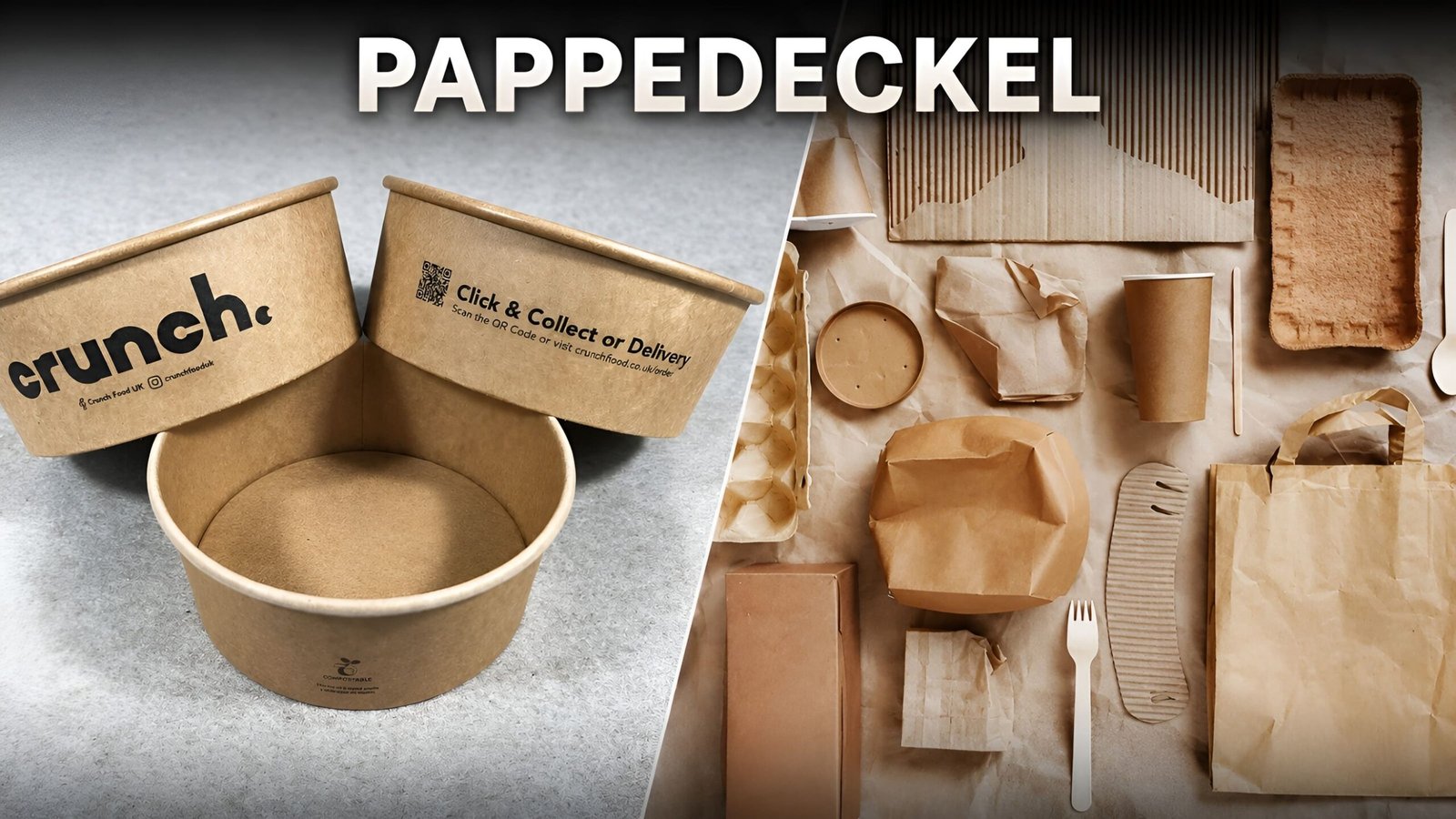
Pappedeckel is a paper or cardboard-based lid used in food and beverage packaging as an eco-friendly alternative to plastic. It is widely used in coffee cups, takeaway containers, and retail packaging because it is recyclable, lightweight, and helps reduce environmental pollution.
Introduction: The Quiet Shift Behind Everyday Packaging
In today’s world, most people don’t think twice about the lid on their coffee cup or the cover on a takeaway meal. Yet behind these simple objects lies a major global transformation. Pappedeckel has quietly become one of the most important symbols of sustainable packaging. It represents a shift away from plastic dependence toward materials that return safely to nature. In the first clear definition, Pappedeckel refers to a cardboard or paper-based lid used in packaging, especially for food and beverages, designed as an eco-friendly alternative to plastic. It matters because it reflects how industries are responding to pollution concerns, environmental regulations, and changing consumer behavior. People search for it not just out of curiosity, but because it represents a bigger question: how can everyday convenience become environmentally responsible without losing quality or practicality?
What is Pappedeckel? Meaning and Real Purpose
Pappedeckel comes from the German language, where “Pappe” means cardboard and “Deckel” means lid. Together, it describes a simple but powerful idea: replacing plastic covers with paper-based or cardboard alternatives. At its core, it is designed to protect food, seal containers, and support takeaway packaging while reducing environmental harm. Unlike traditional plastic lids that can remain in landfills for centuries, Pappedeckel is made from recyclable fibers that break down far more easily. It is widely used in cafes, fast-food chains, and eco-conscious brands that want to reduce their environmental footprint. What makes it especially interesting is not just the material itself, but the mindset behind it. It reflects a growing awareness that even the smallest packaging choices can have a long-term impact on the planet and future generations.
Why Pappedeckel Matters in Today’s World
The rise of Pappedeckel is not random—it is deeply connected to the global fight against plastic pollution. Every year, millions of tons of plastic waste enter oceans, rivers, and landfills, creating long-term damage that is difficult to reverse. Governments, environmental groups, and even businesses are now under pressure to find alternatives that are both practical and sustainable. Pappedeckel plays an important role in this transition because it offers a realistic replacement for everyday packaging needs. Based on available environmental reports, single-use packaging is one of the largest contributors to urban waste. This is where paper-based solutions like Pappedeckel step in. It doesn’t solve every environmental problem, but it represents progress. It shows how industries can slowly shift toward materials that reduce harm without completely disrupting consumer habits or business operations.
Materials Behind Pappedeckel and How It Is Made
The production of Pappedeckel begins with something simple yet powerful—paper fibers. Most manufacturers use recycled paper, cardboard sheets, or sustainably sourced wood pulp. These raw materials are processed into a pulp, which is then shaped, compressed, and dried into lids or covers. In many modern facilities, biodegradable coatings are added to improve moisture resistance, especially for hot beverages or food items. According to several industry sources, these coatings are often water-based or plant-derived, reducing reliance on petroleum-based plastics. The manufacturing process is designed to balance strength and sustainability, ensuring that the final product is functional while still environmentally responsible. What makes this process important is not just technology, but the intention behind it—to create packaging that serves daily needs without creating long-term ecological damage.
Different Types of Pappedeckel in Use Today
Pappedeckel is not a single fixed product; it comes in several variations depending on its use. The most common type is the flat cardboard lid used for food trays and containers. Another widely used version is the coffee cup lid, designed specifically for takeaway beverages and heat resistance. Businesses also use custom-printed Pappedeckel to display branding, logos, and marketing messages, turning simple packaging into a communication tool. In industrial settings, stronger versions are used for covering stacked products during transport. Each type serves a slightly different purpose, but they all share the same foundation: replacing plastic with recyclable materials. This flexibility is one of the reasons Pappedeckel has gained attention across industries, because it adapts to both small cafés and large-scale packaging systems without losing its environmental identity.
Benefits That Make Pappedeckel Stand Out
One of the strongest reasons for the growing popularity of Pappedeckel is its environmental benefit. It significantly reduces plastic waste and supports recycling systems already in place in many countries. Another important advantage is its lightweight nature, which helps reduce transportation costs and energy use during shipping. From a business perspective, it also offers branding opportunities, allowing companies to print logos or eco-friendly messages directly on the material. Based on consumer trends reported in sustainability studies, people are more likely to trust and support brands that use eco-friendly packaging. Pappedeckel also performs well in everyday use, especially in food service environments where convenience and hygiene are important. While it may not yet fully replace plastic in all conditions, it represents a strong step toward more responsible packaging solutions.
Where Pappedeckel is Used in Real Life
Pappedeckel has quietly become part of daily life in many places without most people noticing. It is commonly used in coffee shops where takeaway cups need secure and eco-friendly lids. Fast food restaurants also use it for packaging meals, burgers, and snack boxes. Bakeries rely on it for covering cakes, pastries, and desserts to maintain freshness while reducing plastic usage. In retail, it is used for lightweight product packaging that needs both protection and presentation. Even delivery services benefit from it because it keeps food secure during transport. Media coverage of sustainable packaging trends suggests that its usage is expanding rapidly in urban areas where eco-conscious consumption is growing. This widespread adoption shows that Pappedeckel is not just a concept—it is already part of how modern food and retail systems operate.
Pappedeckel vs Plastic Lids: A Real Comparison
When comparing Pappedeckel with traditional plastic lids, the difference goes beyond appearance. Plastic is known for its durability and resistance to moisture, but it comes with a major environmental cost because it takes hundreds of years to break down. Pappedeckel, on the other hand, is designed to be recyclable and biodegradable, which reduces long-term environmental impact. In terms of strength, modern versions of Pappedeckel are surprisingly reliable, especially when coated with eco-safe materials. Cost has traditionally been a challenge, but as production scales up, the gap between plastic and paper-based alternatives is shrinking. Public preferences are also changing, with many consumers actively choosing brands that avoid plastic packaging. This comparison highlights a simple truth: while plastic may still be practical in some cases, the future clearly leans toward sustainable alternatives like Pappedeckel.
How Pappedeckel is Manufactured Step by Step
The manufacturing process of Pappedeckel is a careful balance between engineering and sustainability. It begins with collecting raw paper materials, often sourced from recycling systems. These materials are broken down into pulp, which is cleaned and processed to remove impurities. The pulp is then molded into specific lid shapes using industrial machines designed for precision and consistency. After shaping, the material is dried and strengthened to ensure it can handle everyday use. In many modern factories, a biodegradable coating is added to improve resistance against moisture and heat. The final stage involves printing, branding, and quality control checks. According to manufacturing reports, this process is continuously evolving as companies try to improve efficiency while maintaining environmental standards. The result is a product that looks simple but involves thoughtful production at every stage.
Challenges and Limitations of Pappedeckel
Despite its advantages, Pappedeckel is not without challenges. One of the main issues is moisture resistance, especially in high-temperature or liquid-heavy environments. Although coatings help, they are not always as strong as plastic in extreme conditions. Durability under heavy pressure is another limitation, particularly in industrial applications. Production costs can also vary depending on local recycling infrastructure and raw material availability. In some regions, supply chain limitations make it harder to scale production efficiently. However, ongoing research in sustainable materials is addressing many of these concerns. Based on environmental innovation trends, companies are investing heavily in improving paper-based packaging performance without compromising eco-friendly standards. This shows that while Pappedeckel is not perfect, it is continuously evolving.
The Future of Eco Packaging and Pappedeckel
The future of packaging is clearly moving toward sustainability, and Pappedeckel is expected to play an important role in that transformation. Governments across Europe and other regions are introducing stricter regulations on single-use plastics, pushing businesses toward alternative solutions. At the same time, consumer awareness is growing, especially among younger generations who prefer environmentally responsible brands. Innovations in biodegradable coatings, fiber engineering, and smart packaging design are making products like Pappedeckel more durable and efficient than ever before. Industry experts suggest that within the next decade, paper-based packaging could become a standard rather than an alternative. This shift is not just about materials—it represents a broader cultural change in how society views consumption and responsibility.
Conclusion: A Small Object With a Big Message
Pappedeckel may seem like a simple cardboard lid, but it carries a much larger meaning. It represents a global movement toward sustainability, responsibility, and smarter consumption. While it does not solve every environmental challenge, it shows that change often begins with small, practical steps. From coffee shops to global food chains, its presence is growing quietly but steadily. The story of Pappedeckel is not just about packaging—it is about rethinking everyday choices and understanding their impact on the world. As innovation continues and awareness spreads, it is likely to become an even more important part of modern life. In many ways, it reminds us that even the simplest objects can shape a more sustainable future.
FAQs
What is Pappedeckel used for?
It is used as an eco-friendly lid or cover for food and beverage packaging, especially in takeaway services.
Is Pappedeckel recyclable?
Yes, most versions are made from recyclable paper or cardboard materials.
Can Pappedeckel replace plastic completely?
Not fully yet, but it is becoming a strong alternative in many packaging areas.
Is it safe for hot drinks?
Yes, many versions are designed with heat-resistant coatings suitable for coffee and tea.
Where is Pappedeckel commonly used?
It is widely used in cafes, restaurants, bakeries, and eco-friendly packaging industries.
Why is Pappedeckel important for the environment?
Because it reduces plastic waste and supports sustainable recycling systems.
Is it more expensive than plastic?
Initially yes, but costs are decreasing as demand and production increase.
